
After the three-speed FCU OEM wall face is chosen, the next RFQ question is usually copper: how the same relays speak Modbus on the trunk. A fan coil thermostat 3-speed AC fan Modbus install angle keeps 230 VAC fan and heat/cool contacts on the plant side while the BMS reads status and writes setpoints on RS-485.
Modbus3-SpeedFCUOEMRS-485Relay
Alledio’s OEM Thermostat is that SKU class: designed in Slovenia, manufactured in the EU, white-label OEM, not a Nest-style retail box. This post infiltrates the same three-speed fan path with a Modbus install checklist.

Why Modbus install sits after the three-speed relay buyer guide
The earlier 3-speed FCU OEM thermostat buyer guide named relays first. This article assumes that motor class and asks what the commissioning pack must name on the bus. It is written for FCU OEM product managers and BMS partners — not for installers hunting a webshop SKU.
Live sibling context: the white label FCU thermostat post covers brand surfaces. Pair this install angle with the 3-speed FCU OEM thermostat buyer guide and the OEM Modbus relay thermostat deep dive — keep those URLs on buyer-guide and relay-SKU intent; this page owns the RS-485 install and wiring angle only.
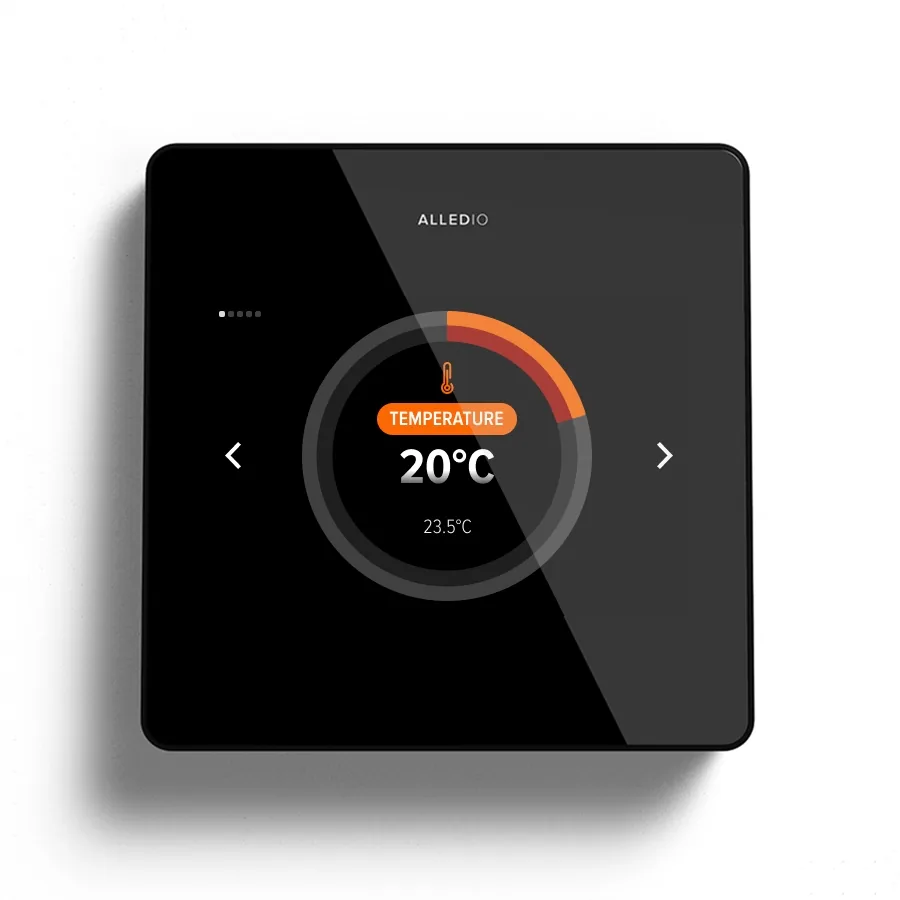
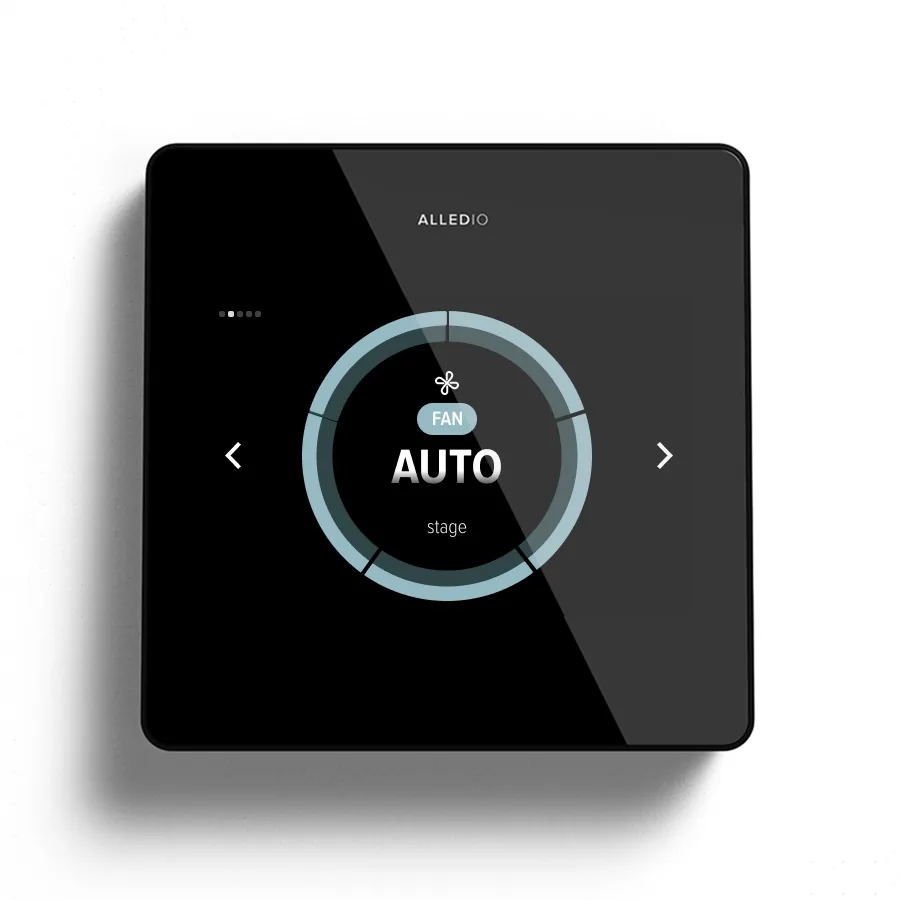
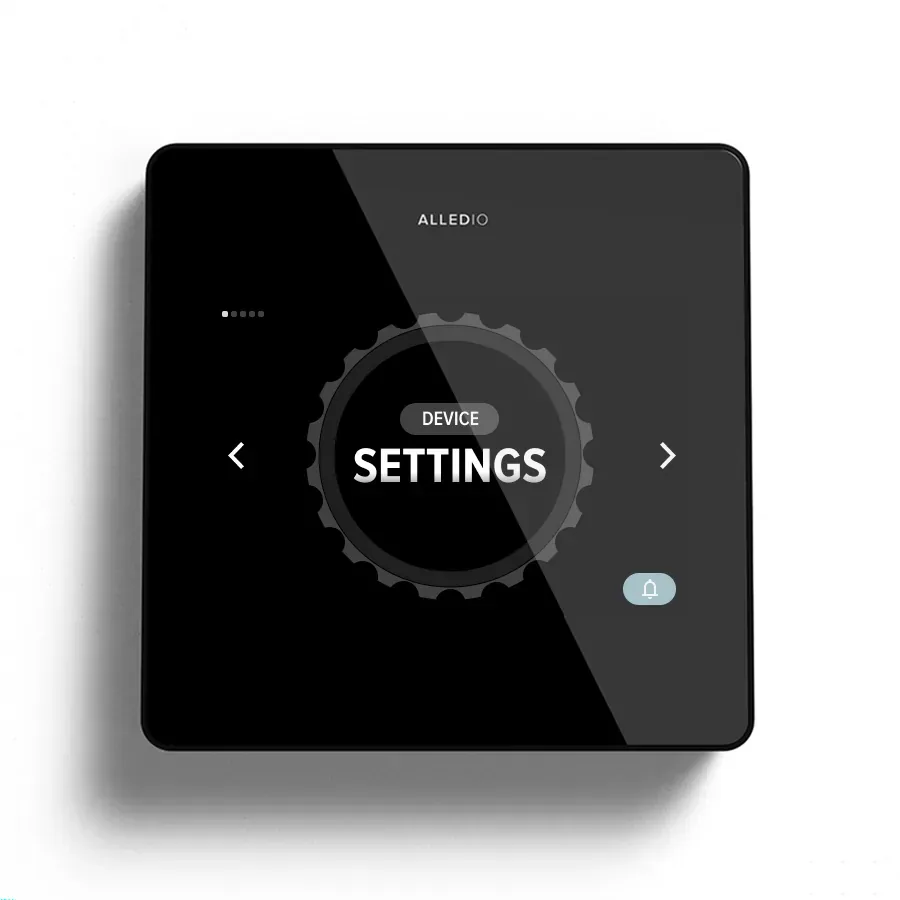
Write motor type, 230 VAC, and the Modbus framing table on one RFQ page. If the coil has moved to analogue EC fans, stop and open the Room Controller conversation instead of inventing EC curves on this thermostat SKU.
Name the end markets you ship into before you freeze the register map. Hotels care about quiet schedules and glass that matches the corridor. Offices care about a Modbus map the BMS already knows. Residential coils care about a simple Auto fan path. Those are brand packs on one board, not three electronics projects. Write them as one NRE conversation.
If your current indoor unit is a private-label wall thermostat from a catalogue house, treat this as a swap of the wall face and the relays, not a swap of the fan-coil chassis. The occupant only ever sees your glass. The plant still sees contact closures for fan speeds and heat or cool.
RS-485 wiring for a fan coil thermostat 3-speed AC fan Modbus trunk
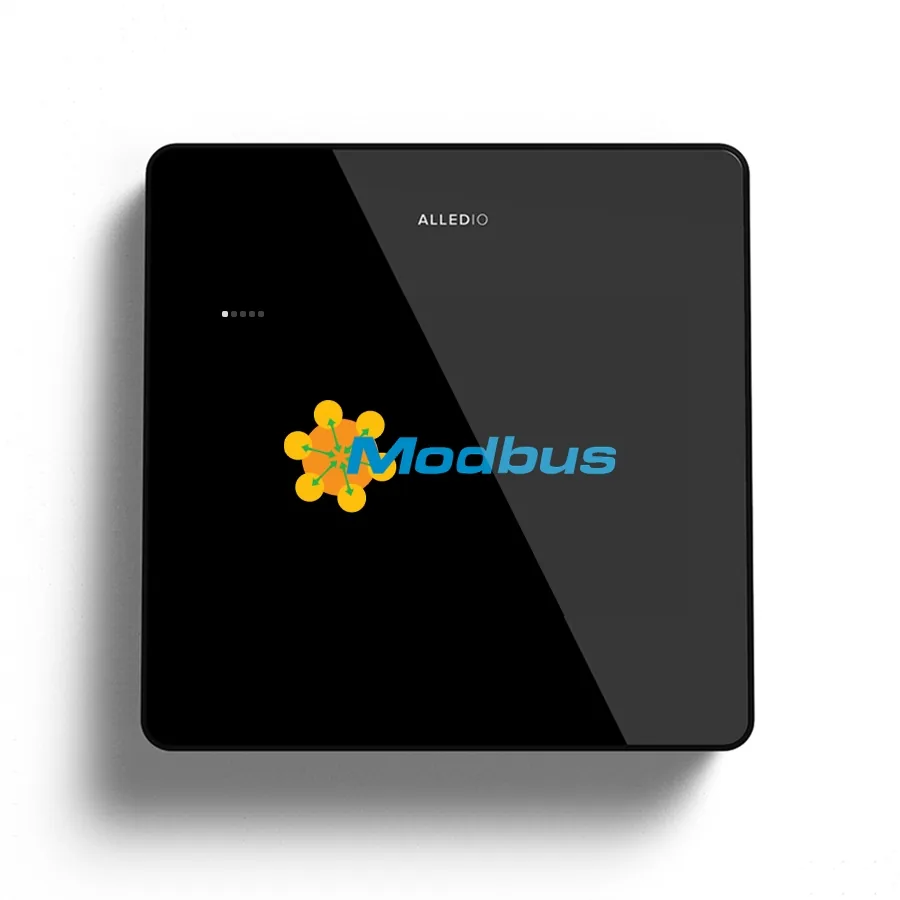
Name the cable class you already pull, the A/B polarity convention your plant uses, and whether the segment is terminated at the last device. Half-duplex Modbus RTU on RS-485 fails first on framing and polarity, not on logo artwork. Put those notes next to the mechanical drawing.
Ask for baud 9600–115200 (4800 also listed), parity none / even / odd, address 1–247 (default 1), 8 data bits and 2 stop bits as on the product page. Match those numbers to the FCU controller note so the first sample does not fail on a framing mismatch.
Wi-Fi 2.4 GHz STA is listed for connected SKUs; MQTT is named for cloud or web services. That path does not replace the copper pair when the BMS is already on Modbus. Write the split as a SKU decision.
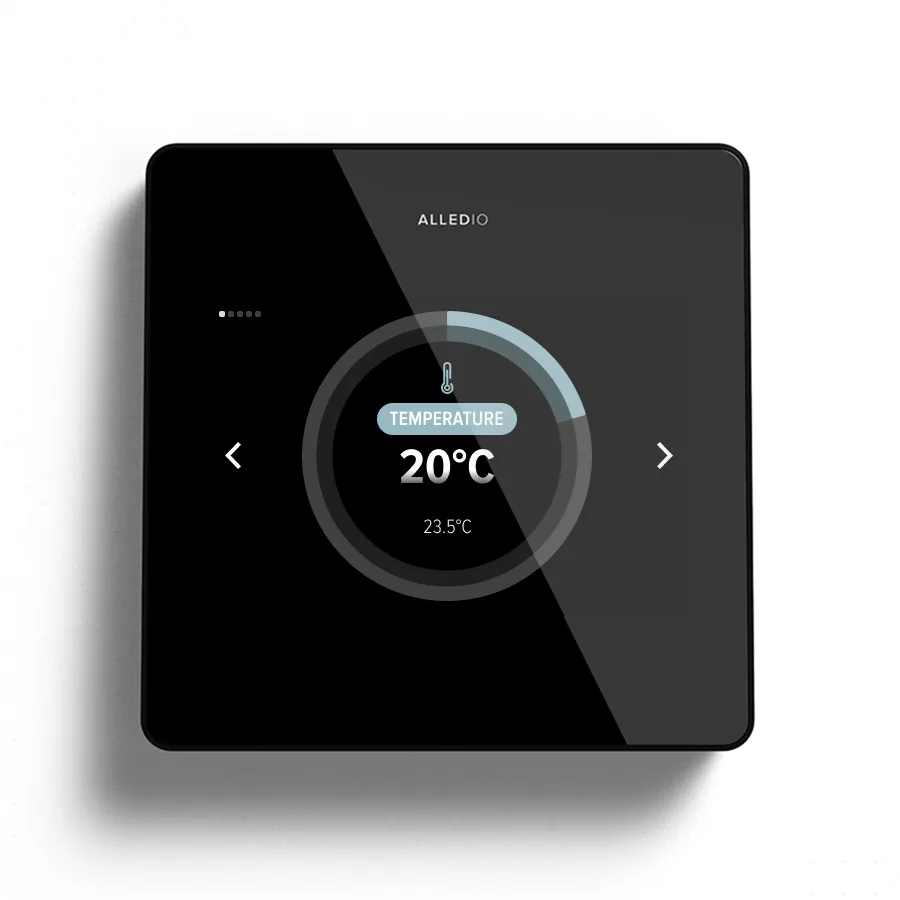

Related live reading on wall UI form factors without changing the relay class: OEM wall UI flush mount, 3.5-inch OEM HVAC touch panel, and Modbus RTU wall user interface. Keep those links descriptive of glass and bus — this RFQ still owns the three-speed relays.
Document who owns bus addressing across floors. A hotel corridor and an office floor plate often share the same electronics revision and differ only in slave-ID plans and glass colour. That is still one thermostat SKU with two commissioning packs. Keep the difference in the RFQ as a documentation delta, not a second board.
Relay map the plant must see
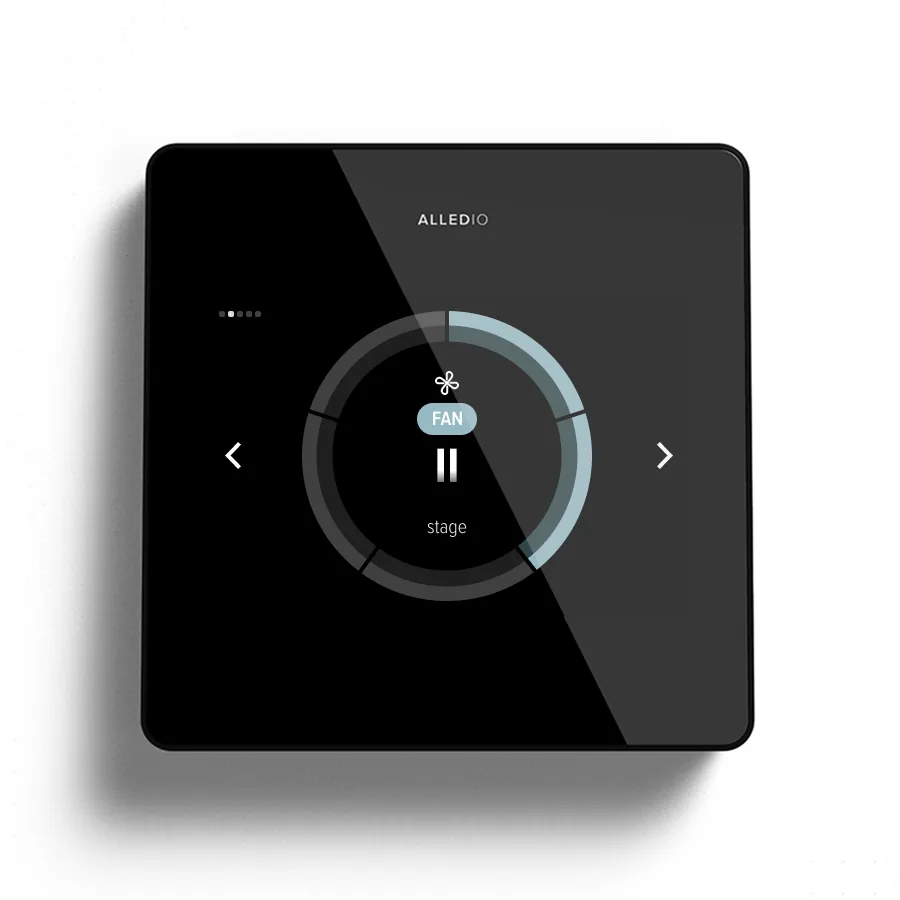
The published fan path is contact closures for speed 1 / 2 / 3 / Auto / off, plus heating and cooling relays. Occupants see temperature, humidity, setpoint, and optional air-quality colour. Commissioning sees a known relay map.
Do not invent a Room Controller feature list under the article title. The H1 uses “Room Controller” as market language; the SKU you quote here remains the Alledio OEM Thermostat Modbus Relay. If you need 0–10 V fan or a broader universal I/O wall device, quote the Room Controller as a separate line.
Hotel packs usually want quiet night schedules and a corridor-matched colourway. Office packs usually want the same three-speed relays plus a Modbus map the BMS already expects. Write those as two brand packs on one electronics revision — one NRE conversation.
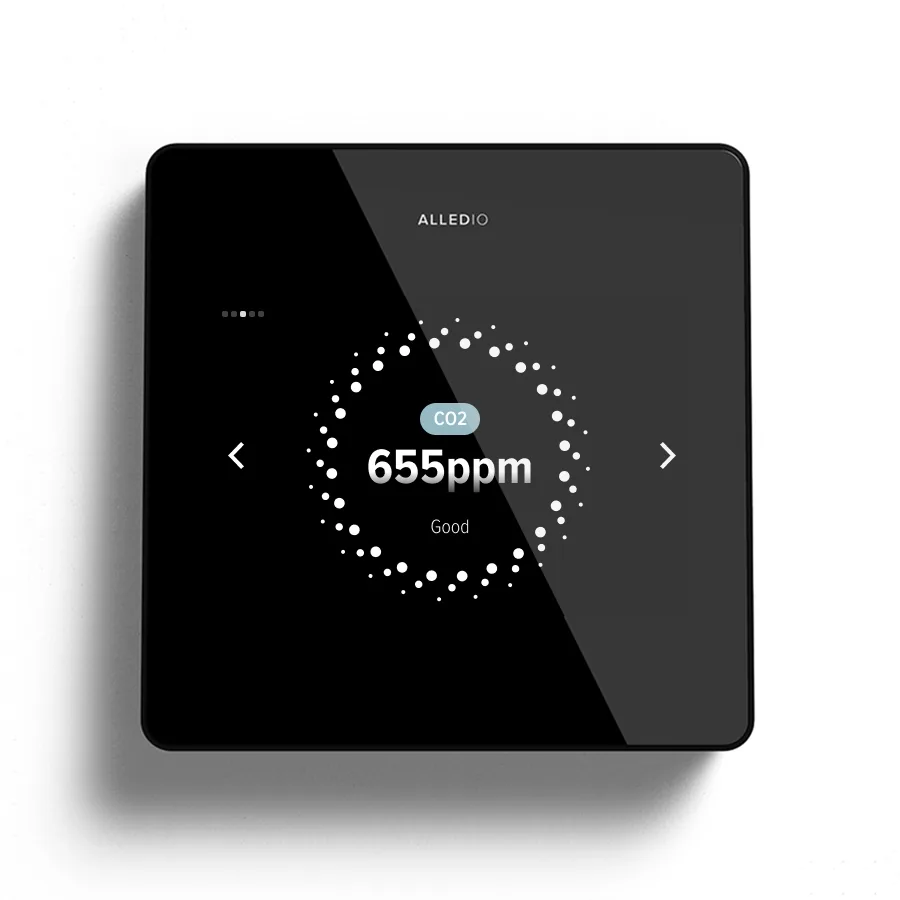
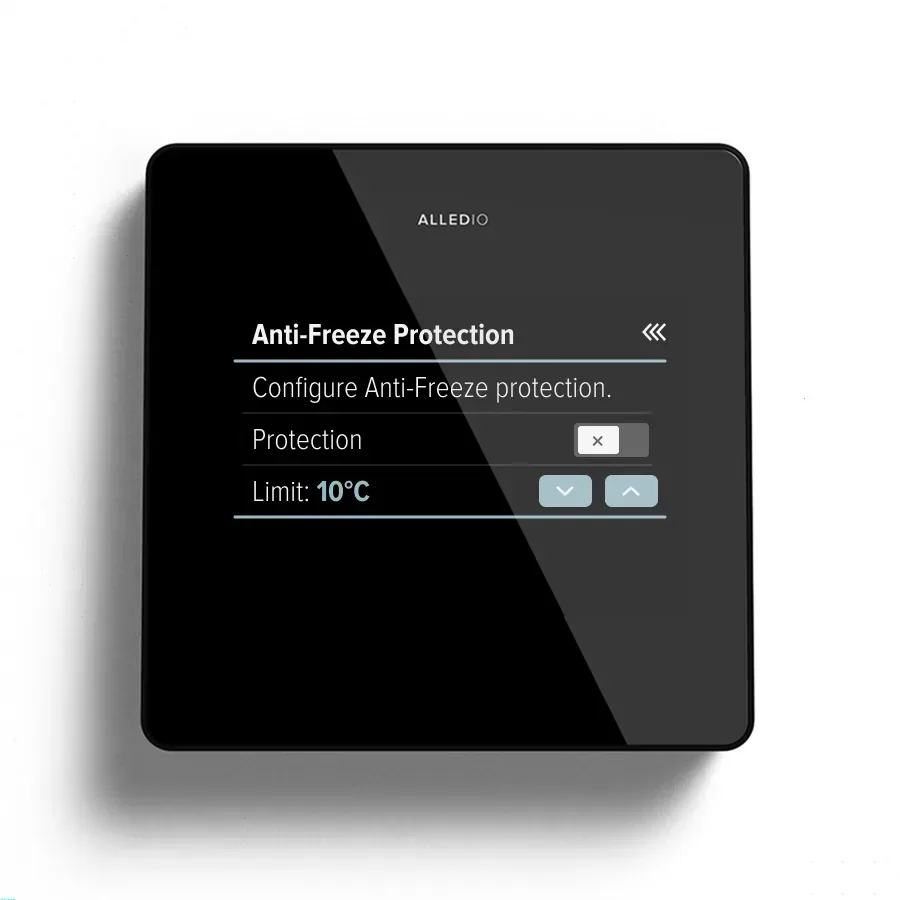
Power is 230 VAC. Mechanics: 98 × 98 × 14 mm, 150 g, IP20, EU flush box Ø 60 mm. Display: 3.5" capacitive 480 × 320. Compliance listed: CE, EN 60730-1, EN 60730-2-9, EN 300 328 V2.2.2. Security updates are listed as 5 years.
Colourways are white, black and silver, plus custom on the OEM path. Ambient on the page is −10 to +50 °C, max. 85% rH non-condensing. Those numbers belong next to your corridor elevation. They are not a licence to invent a second thickness or a surface-mounted retail brick. Keep the language of a flush OEM wall thermostat.
I/O behind the glass for Modbus commissioning
Ask for the ICD with the mechanical drawing. Specify whether the host expects holding registers, input registers, or both. Alledio can ship a map that matches a map you already use — do not invent addresses in this article.
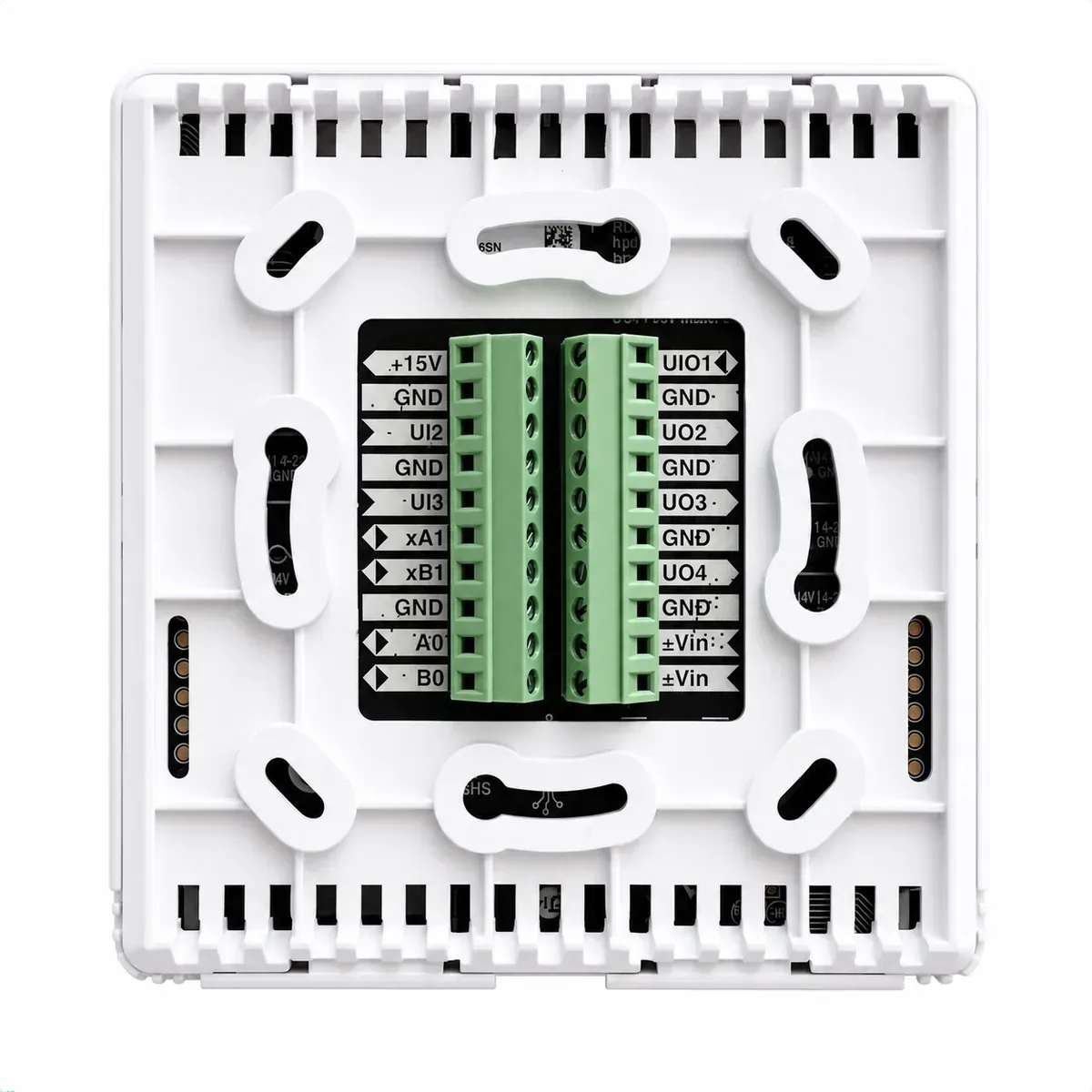
Four I/O models sit on top of fan-speed relays and heat/cool contacts. Name the model in the RFQ. Do not invent EC curves, BTL listings, or a KNX catalogue SKU on this page. Those are out of scope unless quoted as OEM work.
Optional sensors (VOC, CO2, external NTC) change the glass and the register surface you document — they do not change the three-speed relay fan path. Keep optional sensors as a confirm-this-SKU line in the RFQ.
Occupied and unoccupied modes, window contacts, and changeover logic belong in the sequence note you attach to the coil. The wall device still switches relays and reports status on Modbus. Plant sequences stay on the controller you certify unless you quoted a different Alledio family. That split keeps CE and EMC claims honest per SKU.
Name the sample count you need under NDA and whether demo firmware or test firmware is required for the first bench. Write who owns the artwork and who owns the register map. Those two owners should sign the same RFQ so NRE does not split into two silent projects. That is how OEM programmes stay honest on MOQ.
OEM RFQ checklist without assuming RU/RC family MOQ
The commercial model is high-MOQ OEM for this thermostat SKU. The usual MOQ is 1,000 pcs, and it is negotiable. Confirm quantities for this thermostat SKU only — do not assume Room Unit / Room Controller family combine rules unless the OEM programme quotes them for this line.
Samples with demo firmware or test firmware are available under NDA via /oem. Name the sample count, who owns artwork, and who owns the register map. Those two owners should sign the same RFQ so NRE does not split into two silent projects.
Link the product page, Room Unit, Multi-Sensor, About, Contact, and Development when the buyer needs adjacent families — keep each as its own SKU conversation. Do not sell to installers from a public webshop.
Do not promise an installer webshop, a Nest-style retail box, or a catalogue KNX SKU in the same sentence as this thermostat. Those promises break channel strategy and force a redesign. Alledio sells to OEMs. Your channel sells to installers. Keep that split as a commercial rule.
Keep the RFQ language precise on units: 230 VAC, 98 × 98 × 14 mm, 3.5" glass, RS-485 half-duplex, Modbus address 1–247. Short paragraphs beat brochure tone. Specifiers should be able to paste the product-proof table into an internal pack without rewriting every cell. That is the point of a defensible OEM page.
When you compare this SKU to a catalogue private-label thermostat, ask what changes on the glass and what stays on the coil. If only the logo changes and the relay map stays honest, you are in the right RFQ. If you need analogue fan or a different power class, stop and open the matching Alledio family page before you invent a hybrid SKU.
Product proof
| Topic | Published spec |
|---|---|
| Product | Alledio OEM Thermostat (Modbus / relay) |
| Power | 230 VAC |
| Fan relays | Speed 1 / 2 / 3 / Auto / off |
| H/C relays | Heating / cooling |
| Bus | RS-485 Modbus RTU, half-duplex |
| Baud | 4800–115200 (default 9600); parity none/even/odd; address 1–247 |
| Wi-Fi | 2.4 GHz (802.11 b/g/n) STA |
| Display | 3.5" LCD, 480 × 320, capacitive touch |
| Sensors (standard) | Digital temperature and humidity |
| Sensors (optional) | VOC, CO2, external NTC |
| Mechanics | 98 × 98 × 14 mm, 150 g, IP20, EU flush box Ø 60 mm |
| Origin | Designed Slovenia, manufactured EU |
| Standards | CE, EN 60730-1, EN 60730-2-9, EN 300 328 V2.2.2 |
| Security support | 5-year update window |
Attach this table to the FCU controls pack, then add logo artwork and colour codes. Leave unpublished cells blank until the datasheet catches up.
FAQ
Can an installer buy one unit from a webshop?
No. Alledio sells to OEMs only.
Does this post invent a Room Controller SKU under the title?
No. Quote the Alledio OEM Thermostat Modbus Relay for three-speed relays. Use the Room Controller only when you need a separate I/O class.
Should we assume EC fan control on this trunk?
No. Do not assume EC. The published fan path is three-speed relays.
Can we get samples and demo firmware?
Yes. Samples with demo firmware or test firmware are available under NDA via /oem.
What is the MOQ for this thermostat SKU?
The usual MOQ is 1,000 pcs, and it is negotiable. Confirm this SKU — do not assume RU/RC family combine wording.
Is BACnet in standard thermostat firmware?
No. BACnet is not in standard thermostat firmware; custom BACnet is on request for named datapoints. KNX is already not a catalogue SKU on this path.
Where do live Modbus wall-UI posts fit?
Use the live flush, 3.5-inch, and Modbus RTU wall UI posts for form-factor context. Keep this RFQ on the relay + Modbus install path.
What to do next
Start on the Alledio Thermostat page, compare the Room Controller only if fans are analogue, then open /oem for samples. Bring motor type, 230 VAC, Modbus framing, MOQ for this thermostat SKU, and glass artwork. That is how a fan coil thermostat 3-speed AC fan Modbus install angle becomes a line item your coil can ship.