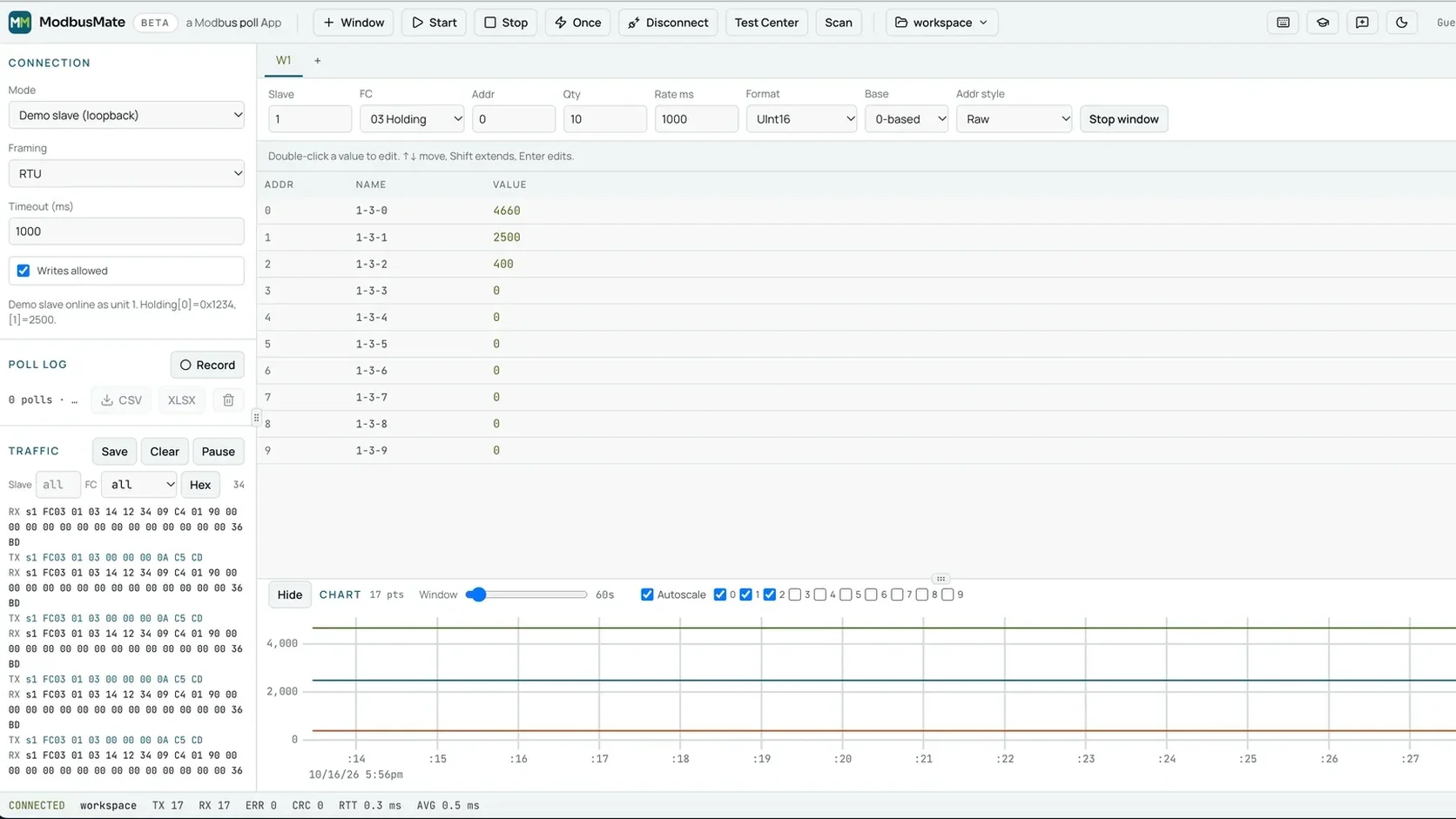
A BMS host does not need a closed thermostat on the wall. It needs a register-mapped display and sensors it can poll. A Modbus RTU wall user interface is that class of device: slave by default, RS-485 on copper, setpoints and T/RH in a map the OEM owns, plant algorithms still on your board.
Modbus RTUModbus RS-485OEMBMSHVACTemperature
Alledio’s Room Unit is designed and manufactured in Slovenia for HVAC original equipment manufacturers. The host still runs the plant. The glass is the face, the sensors, and the bus citizen. A sample is an NDA conversation via /oem, not a webshop.
Who specifies a Modbus wall UI
This article is for OEM product managers, controls engineers, and BMS device makers who need a branded wall interface at production volume.
Typical lines that pull a wall UI into an RFQ are air handling units, residential and commercial heat pumps, VAV and rooftop units, ductless mini-splits, VRV, chillers, boilers and DHW, plus actuator-facing panels. End markets include offices, schools, hotels and museums. Installers and system integrators cannot buy Alledio direct. The commercial model is high-MOQ OEM (usual MOQ 1,000 pcs, negotiable). A sample is an NDA conversation, not a catalogue click.
If you already wrote a broader bus brief, keep this post next to OEM Modbus Room Unit for HVAC Brands. That piece covers how to phrase the RFQ. This one is narrower: the wall device as a register-mapped display and sensor, not as a closed thermostat you drop on a 230 VAC box.
If purchasing needs standalone I/O and application logic in the same family, that is the Room Controller, not this SKU. Keep that split in the RFQ so a display is not quoted as a controller.
A register-mapped display, not a closed thermostat
A closed thermostat decides heat, cool and fan on its own board, then maybe publishes a few points. A Room Unit does the opposite. Occupants see temperature and humidity, set a setpoint, pick fan speed or Auto, can hold a weekly schedule, and can open notifications. Optional firmware can surface recuperation or a sanitary hot-water shortcut. Those screens are still requests to a host unless you specified the Room Controller.
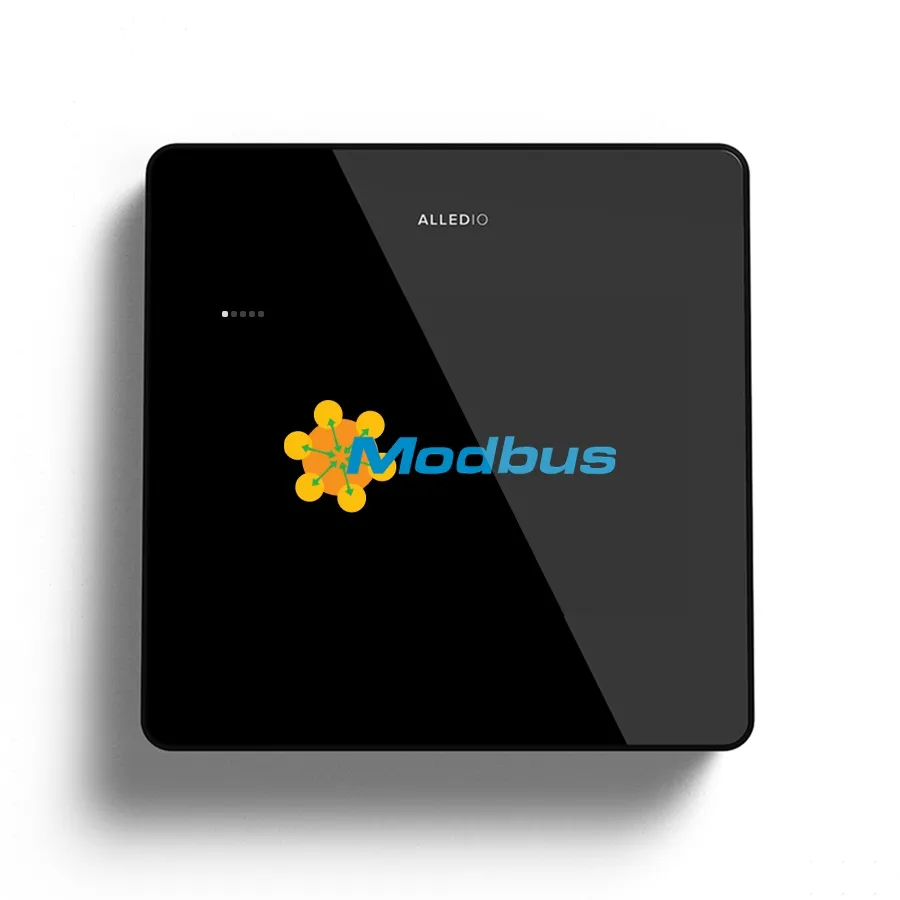
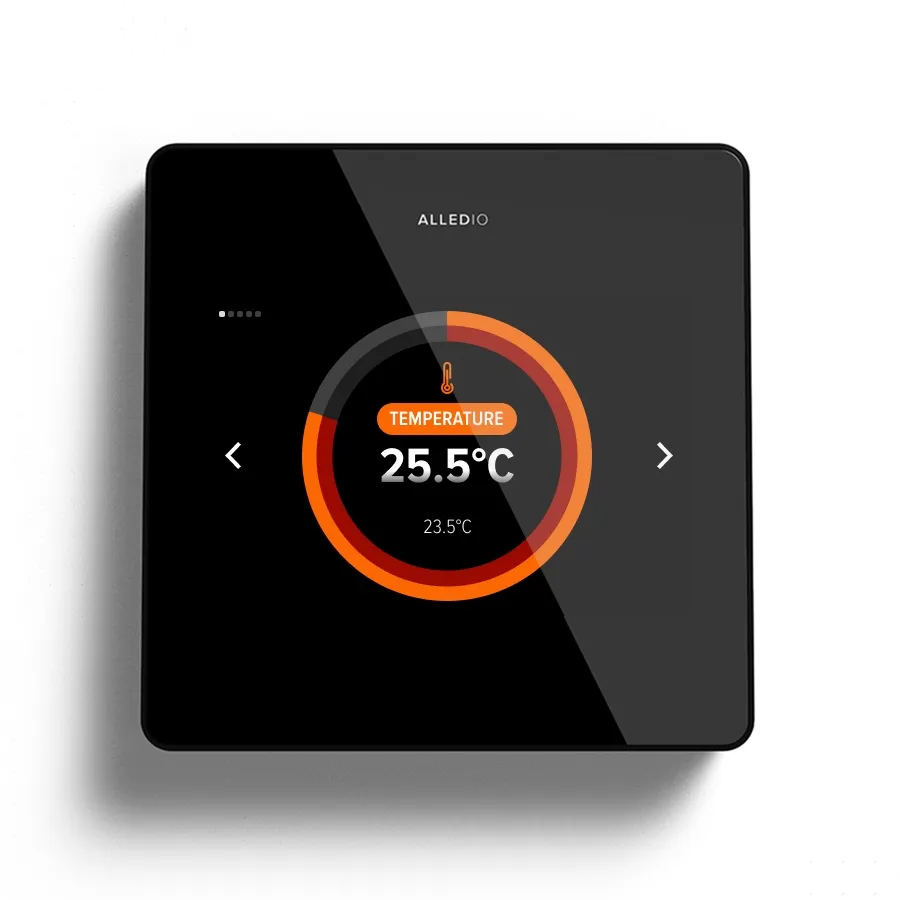
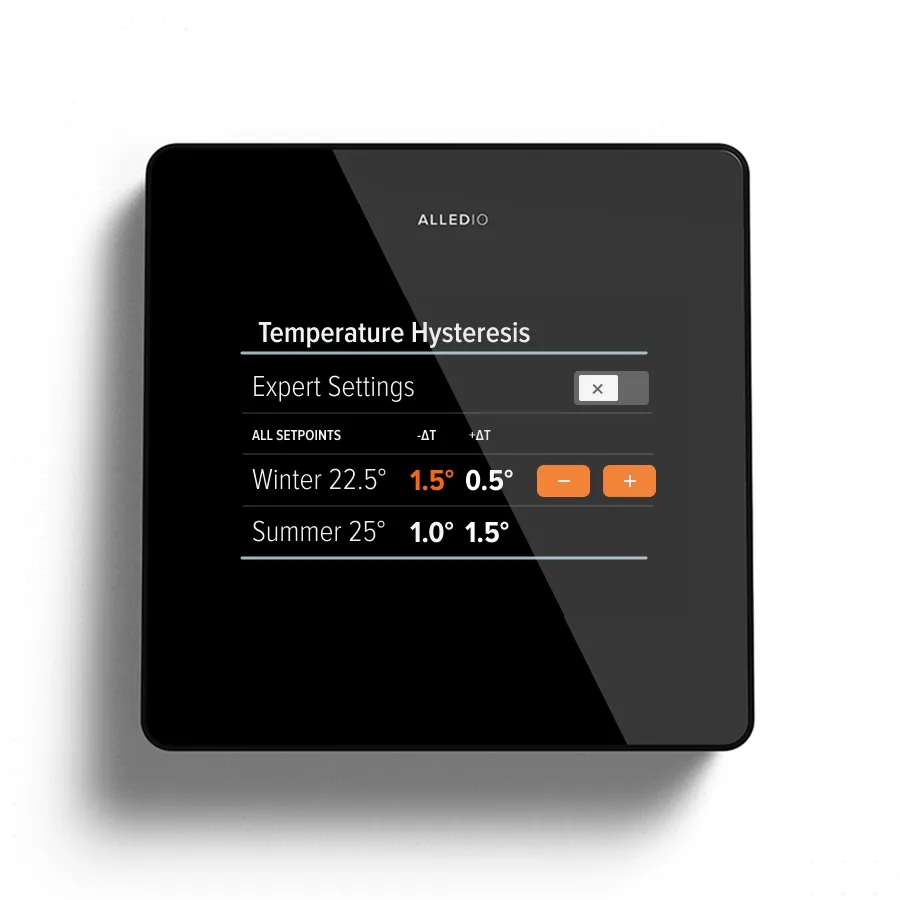
On an AHU line the board already certified for safeties keeps supply-air limits, frost and fire-mode. On a heat pump the outdoor unit and hydronic logic stay on your controller; the wall unit publishes occupancy, setpoint and sensor values. On a fan-coil or VAV box, fan and damper commands still leave the host, even if the occupant only ever touches the glass.
That split is the commercial point. You keep control IP, sequencing and safety on the board you already certify. Occupants get a 3.5" capacitive panel that feels like your brand. Wi-Fi is for OTA and, for verified partners, MQTT or REST. BLE 5 is ready; the GATT map is yours. None of that turns the wall unit into a miniature DDC.
Write the host contract in one page: which registers are read-only sensors, which are writable setpoints, and which bits are alarms. If the glass can enter an unoccupied or boost state, say whether that is a local timer or a request the host must honour. Ambiguity here is how field teams later “fix” a unit by writing plant logic into a display.
Relays are the other mix-up. This SKU does not carry 230 VAC relays for a 3-speed fan or a heat/cool pair. That hardware lives on the OEM Modbus relay thermostat or the Room Controller. Quote those families when the indoor unit must switch loads from the wall. Quote this Room Unit when the wall is a display and sensor on your bus.
Modbus RTU vs Modbus TCP wall
Buyers write “Modbus wall UI” and then argue on site about sockets. Modbus RTU and Modbus TCP share a register model; they do not share a physical layer.
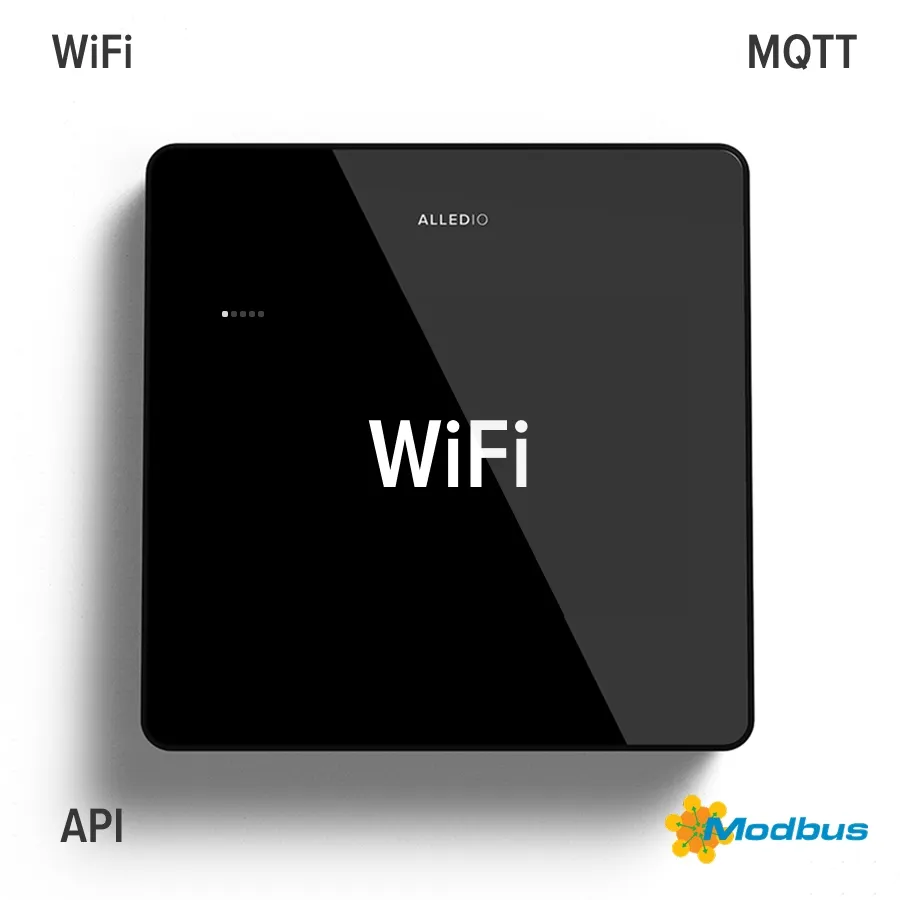
RTU is the serial framing. On this product it runs half-duplex on RS-485, slave by default, with baud rates the product page lists from 9600 through 115200, parity none/even/odd, and software-defined termination. Addressing is a slave ID on a copper pair. Cable is a twisted pair with drain and foil, or an equivalent that already meets the RS-485 practice your plant uses. That is the default wall path.
TCP is the same protocol wrapped for IP. It wants an Ethernet or IP stack, a unit identifier on a socket, and a different commissioning habit. The Room Unit does not publish a Modbus TCP catalogue SKU on the wall. The Wi-Fi radio is 2.4 GHz, STA or AP, and the module can carry TCP or UDP for OTA, HTTPS, and partner MQTT or REST. That radio path is not a substitute for the RS-485 pair.
If the RFQ says “Modbus TCP wall,” do not force this SKU. Budget an OEM firmware or hardware quote, or keep TCP on the host and leave the wall on RTU. Master mode on the Room Unit exists only on request; do not assume it. Write slave versus master, baud, parity, termination, and whether the host expects holding registers, input registers, or both. Alledio can match a map you already use. It will not invent one if the RFQ only says “Modbus.”
When several Room Units share one segment, put the addressing table in the RFQ so commissioning is not invented on a ladder. Ask for termination as a software setting, not a field modification. Name the maximum stub length your BMS already allows. Those three lines prevent more callbacks than any glass colourway.
What the host reads and writes
The OEM owns the register map. Say so in the RFQ, and name who writes the ICD and the slave-ID plan.
Standard sensors are digital temperature and humidity. Orderable variants add VOC, CO2 at 400–5000 ppm, pressure and presence. Treat those as line items, not as hidden checkboxes. Comfort copy on the site is specific: the unit manages how the room feels (setpoint, fan, schedule, humidity and air-quality visibility) while the host and the plant do the energy work.
The product page also lists a 0–10 V analogue output as a connectivity option. Confirm that option against the current datasheet before you lock a valve or damper sentence. Do not assume 230 VAC at the wall. Power is 12–42 V DC (24 V recommended) or 24 VAC ±25%. Current at 24 V is published around 0.011 A in operating mode at 50% brightness, with consumption near 0.3 W in that state.
Documents you want back are the ICD, the register list, the mechanical drawing, and a short integration note for the controller team. State MOQ, sample count, and NRE for any firmware delta. Branding scope covers exterior logo, UI colours, widgets, firmware, and whether Wi-Fi and partner MQTT or REST are in the same order. You pay for the delta, not for reinventing a certified radio and a mould.
Facts that belong in the RFQ
Put numbers a factory can quote, not adjectives. The published envelope is a flush 98 × 98 × 23 mm, IP20 housing in ABS plus scratch-resistant glass, 150 g, 3.5" LCD at 480 × 320 with capacitive touch and auto brightness. Colourways include white, black and silver, plus custom. The 23 mm body is meant for a standard European wall box, not a surface brick. If your indoor unit already speaks a 98 mm cut-out language, keep that language across a hotel, an office and a residential heat-pump controller without drawing a new fascia for each SKU.
| Topic | Published spec |
|---|---|
| Display | 3.5" LCD, 480 × 320, capacitive touch, auto brightness |
| Sensors (standard) | Digital temperature and humidity |
| Sensors (optional) | VOC, CO2 (400–5000 ppm), pressure, presence |
| Bus | RS-485 Modbus RTU, 9600–115200 baud, slave default |
| Power | 12–42 V DC or 24 VAC ±25%; ~0.3 W at 50% brightness |
| Mechanics | 98 × 98 × 23 mm, 150 g, IP20 |
| Origin | Slovenia, EU |
| Security support | 10-year update window |
Compliance you can defend is RED 2014/53/EU, including the cybersecurity delegated act, plus RoHS, and a 10-year security-update window from first placement on the market. Confirm any cell you cannot see on the current datasheet before you lock an RFQ. The Room Unit was on the floor at Smart Building Expo Milan 2025 as a branded HVAC wall UI, not a DIY thermostat. How the room feels, not only how the glass looks, is also the thread of Beyond design: it’s how it feels.
Native BACnet is not a catalogue SKU on this product; that bus lives on the Multi-Sensor family. KNX is not listed as a shipping protocol on alledio.com. Other buses are OEM firmware or hardware work, quoted separately. Do not hide those as checkboxes on a Room Unit line.
FAQ
Does the wall unit speak Modbus RTU or Modbus TCP?
Modbus RTU over RS-485 is the default. Slave is the default role. Modbus TCP is not a published catalogue SKU on this wall unit.
Does this SKU include 230 VAC relays?
No. Relays for a 3-speed fan and heat/cool live on the 3-speed FCU OEM thermostat or the Room Controller, not on this Room Unit.
Does the plant run in the wall unit?
No. The Room Unit is host-driven. Sequences and safeties stay on your controller, unless you specified the Room Controller.
Can we get samples?
Yes. Samples are available with demo firmware or test firmware, under NDA. This is not a webshop SKU. Start the conversation on /oem.
What is the MOQ?
The usual MOQ is 1,000 pcs, and it is negotiable. If you order several different versions of Room Unit or Room Controller and the combined quantity is over 1,000 pcs, we can go down to 500 on a version.
Can an installer buy this from a webshop?
No. Alledio sells to OEMs. Installers and SIs get units through your channel.
What to do next
Start on the Alledio Room Unit page, then open an OEM conversation for logo, UI, firmware and samples. Bring baud rate, power, sensor options and MOQ. That is the shortest path from an RFQ sentence to a host-driven wall UI that already speaks Modbus RTU.