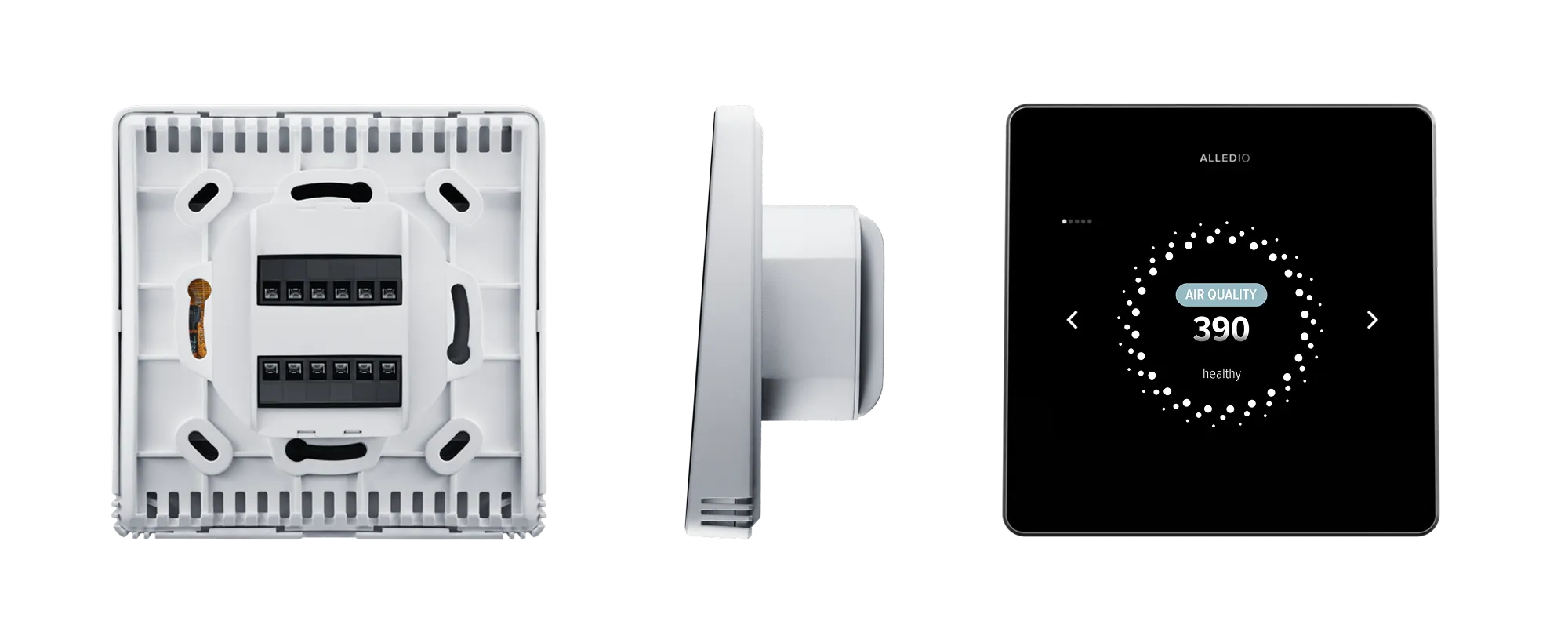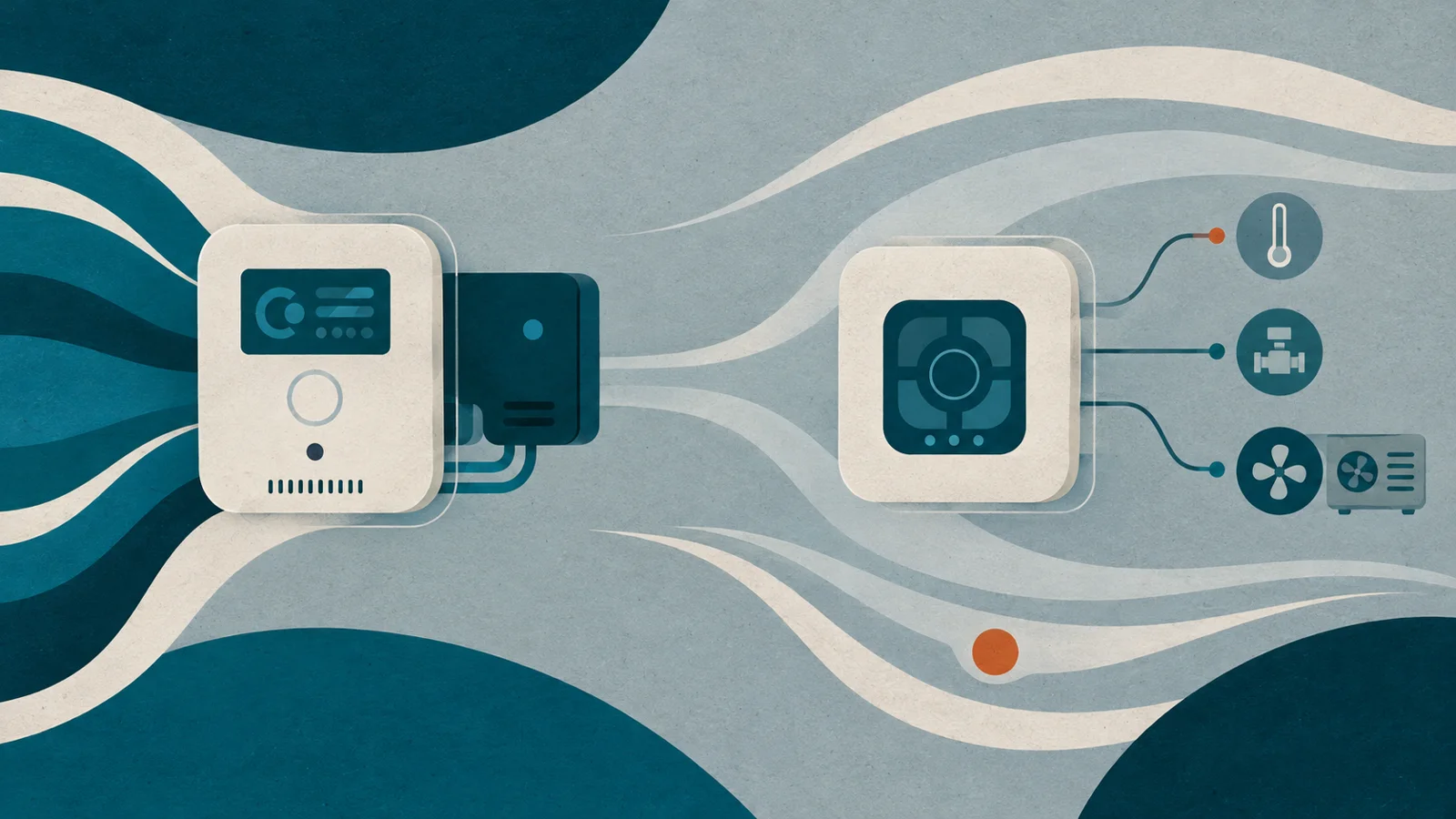
The room unit vs room controller question decides where your control logic lives. A Room Unit is a branded 3.5" touch interface with sensors that reports to the controller or BMS you already certify. A Room Controller adds universal I/O and runs its own loops, so valves, fans and dampers can be driven straight from the wall. This guide gives HVAC OEM product teams the power, I/O, protocol and commercial facts to pick the right Alledio part number before the RFQ goes out.
OEMRoom UnitRoom ControllerHVACModbusCompare
What the RFQ is really asking
This comparison is for OEM product managers, controls engineers and BMS product owners at AHU, heat pump, FCU, VAV and chiller manufacturers - not installers. Alledio devices ship through your channel, under your brand.
When a spec sheet says "room unit", the buyer is usually asking one thing: does the wall device only show and sense, or does it also decide and switch? Write that answer down first. It sets who owns the sequence, who certifies it and who carries the risk when a valve sticks.
If your unit already has a main board that runs the plant, a Room Unit keeps that board in charge and adds a modern face. If the unit has no controller - or you want to remove one - the Room Controller can take the job. Both share the same glass, so the end user sees one consistent design either way.
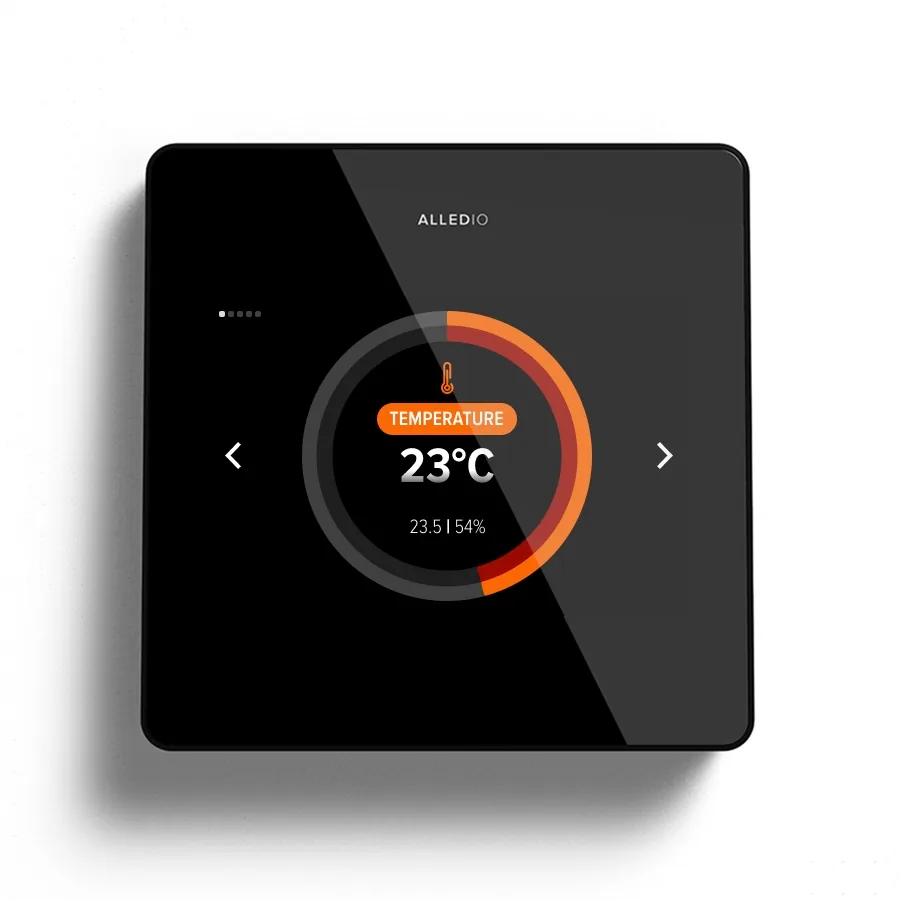
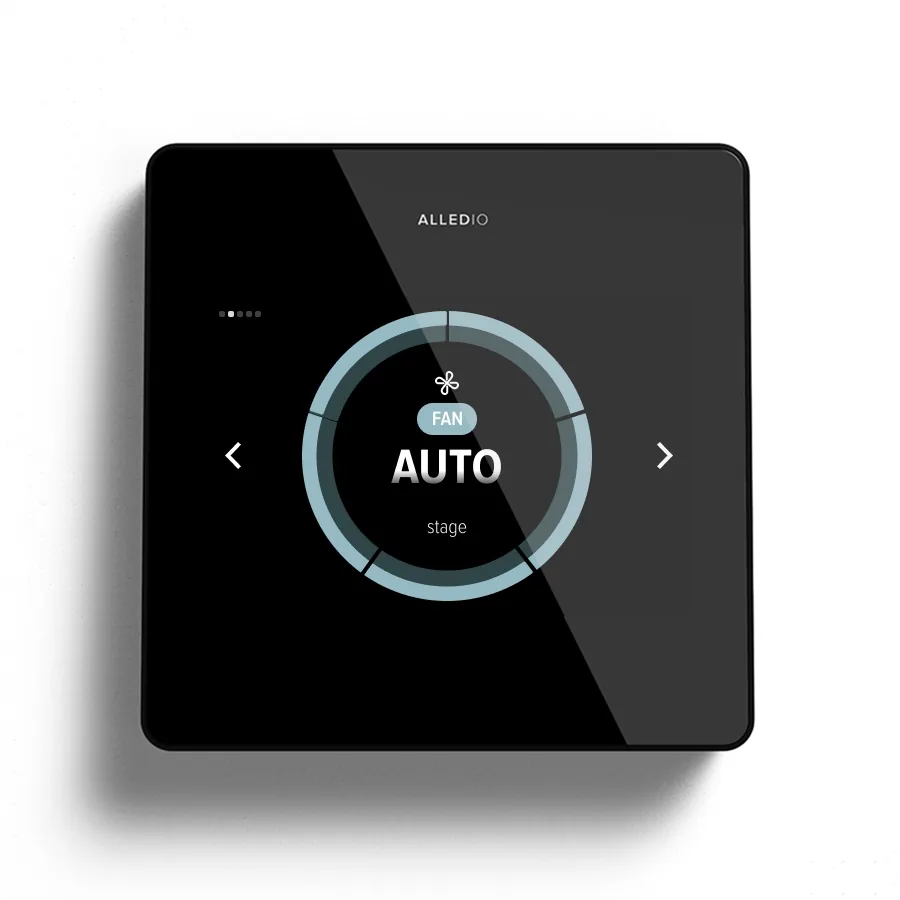
Room unit vs room controller: host, wall node and I/O split
Room Unit: UI and sensors, host runs the plant
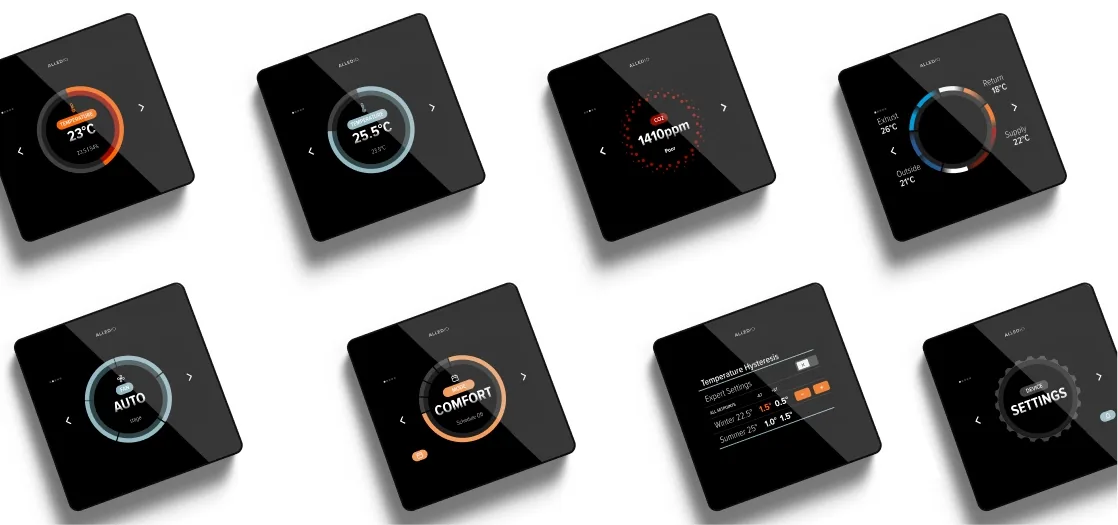
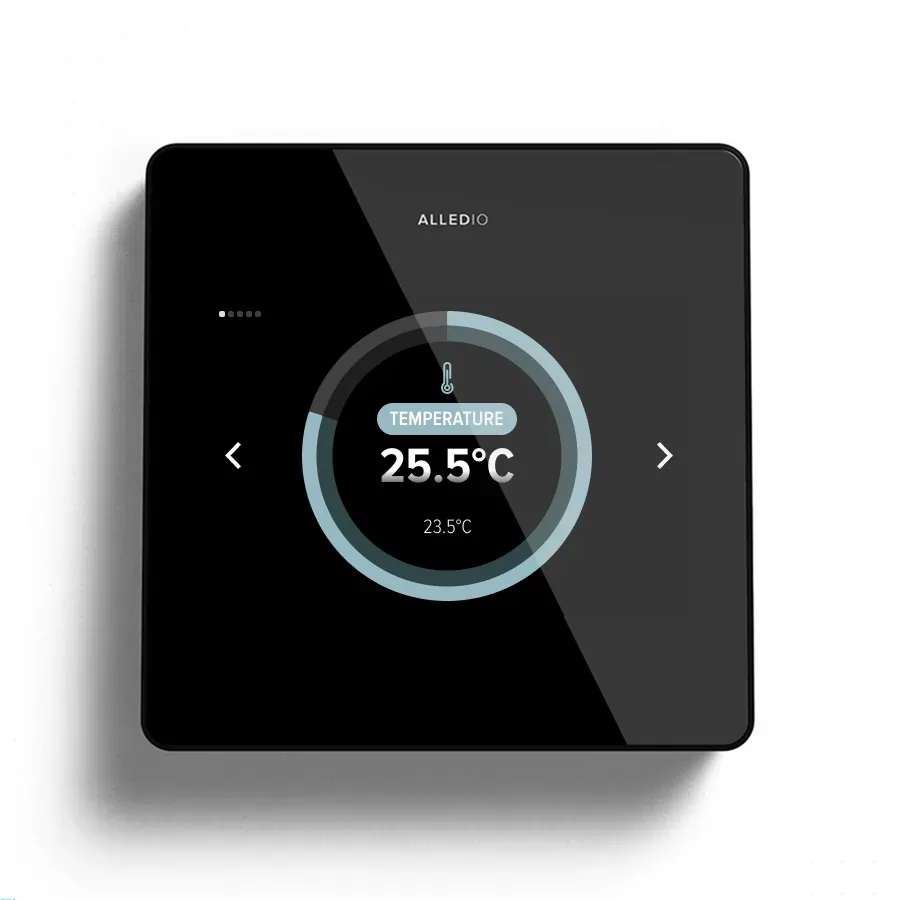
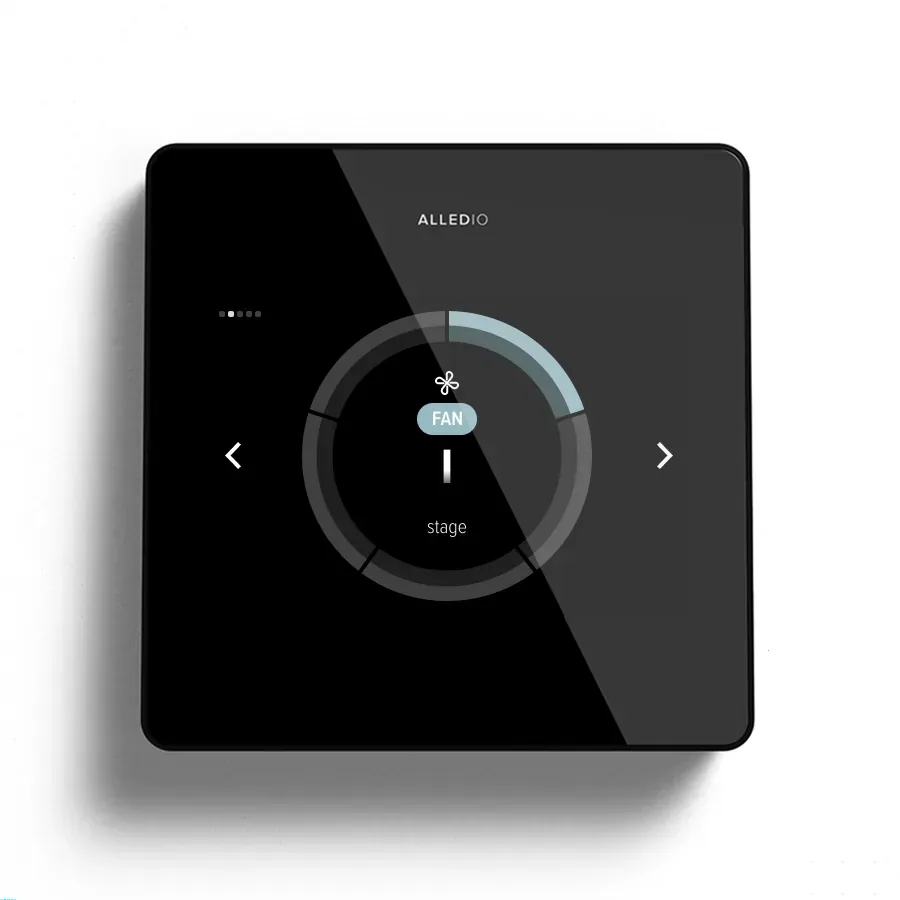
The Room Unit is a 3.5" capacitive 480 × 320 display with automatic brightness, temperature and humidity as standard, and optional VOC, CO2 (400-5000 ppm), pressure and presence sensing. Power is 12-42 V DC or 24 VAC. It has no relays and one optional 0-10 V analogue output for a simple modulating signal.
Everything else - staging, interlocks, frost protection, fan logic - stays on your host. That is a strength, not a gap: your certified algorithms stay in one place, and the wall device can be swapped or rebranded without re-validating the plant.
Room Controller: UI, sensors, I/O and control loops
The Room Controller uses the same glass and adds terminals: a published maximum of 2× UI, 3× UO and 1× UIO, each configurable digital or analogue, with 0-10 V or 4-20 mA on outputs. Power is 18-42 V DC or 24 VAC. It runs its own control loops and can still sit on a Modbus bus as a slave when a BMS is above it.
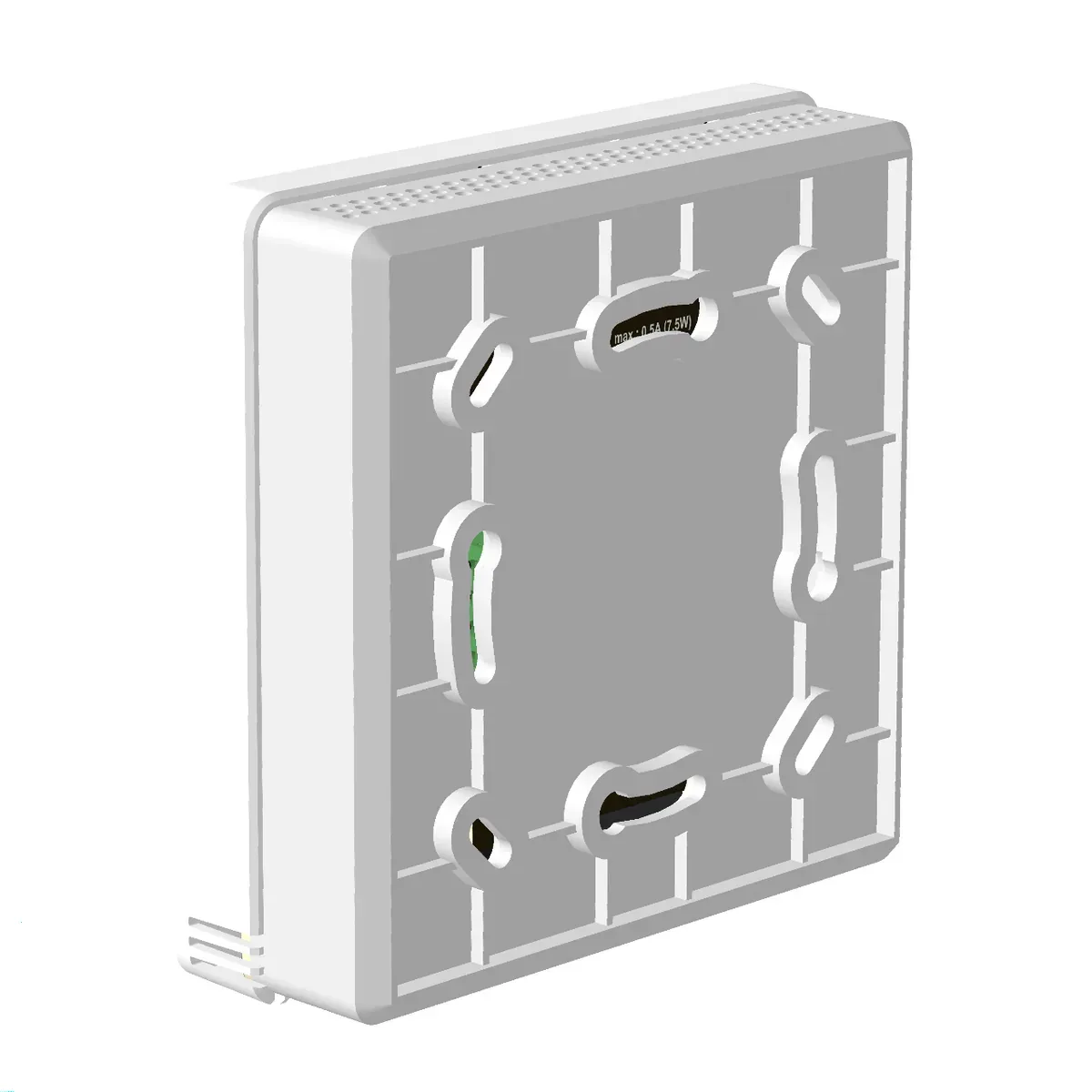
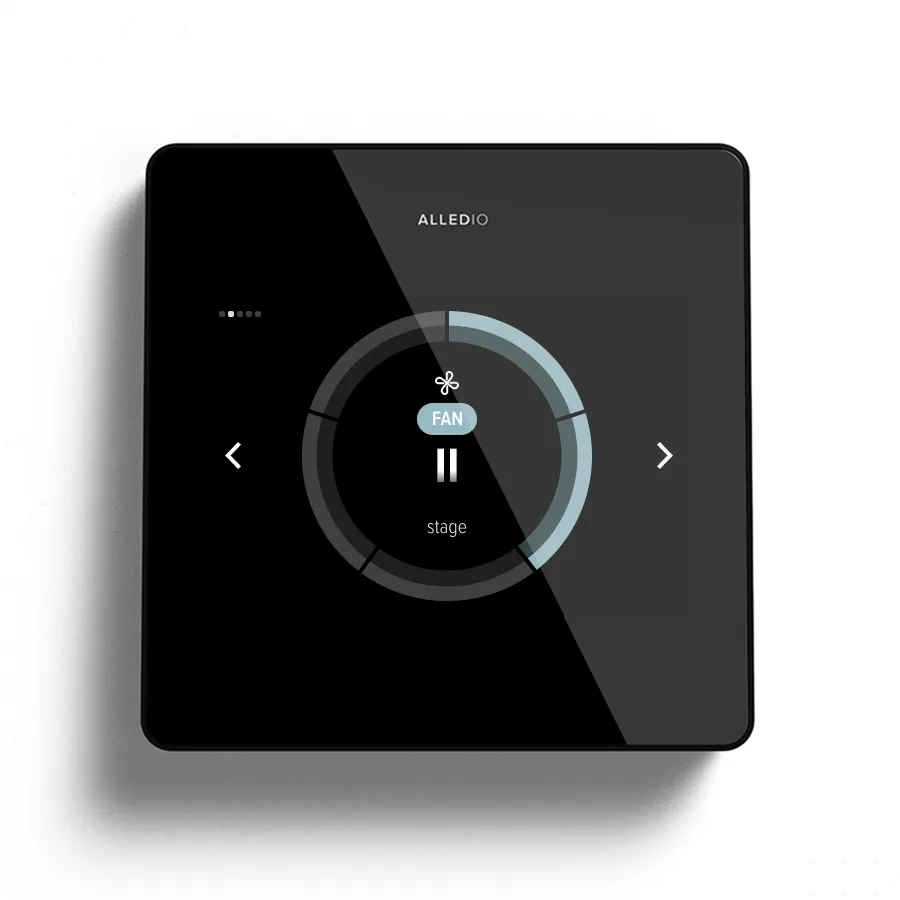
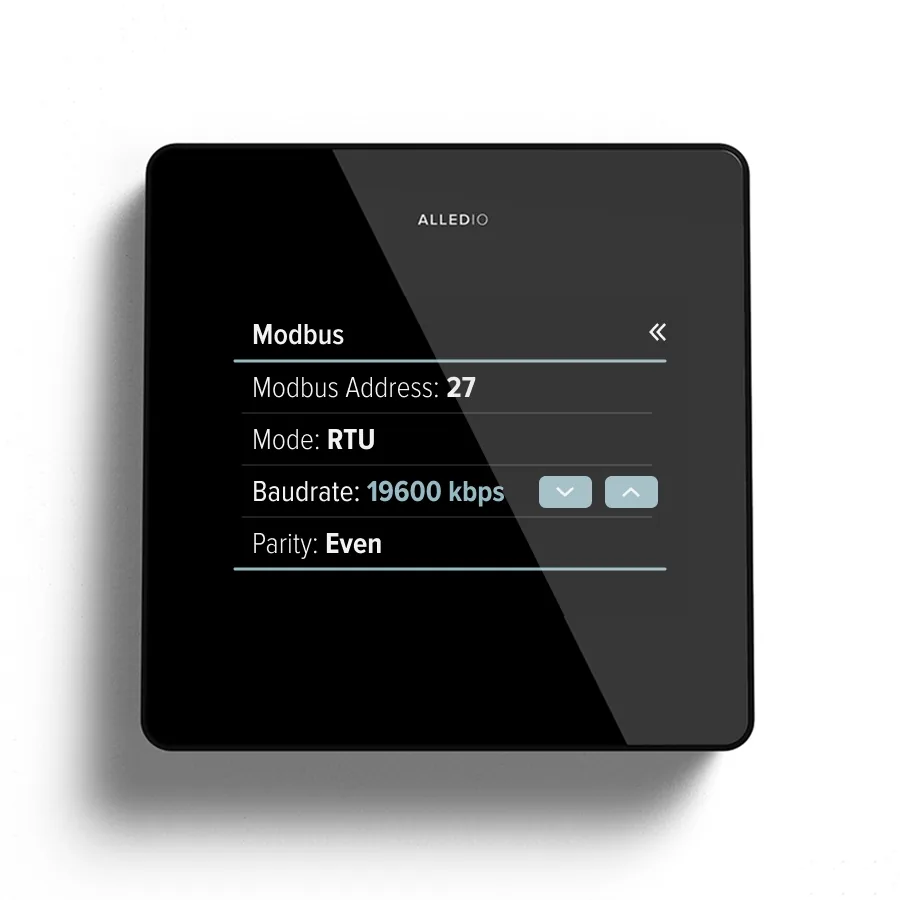
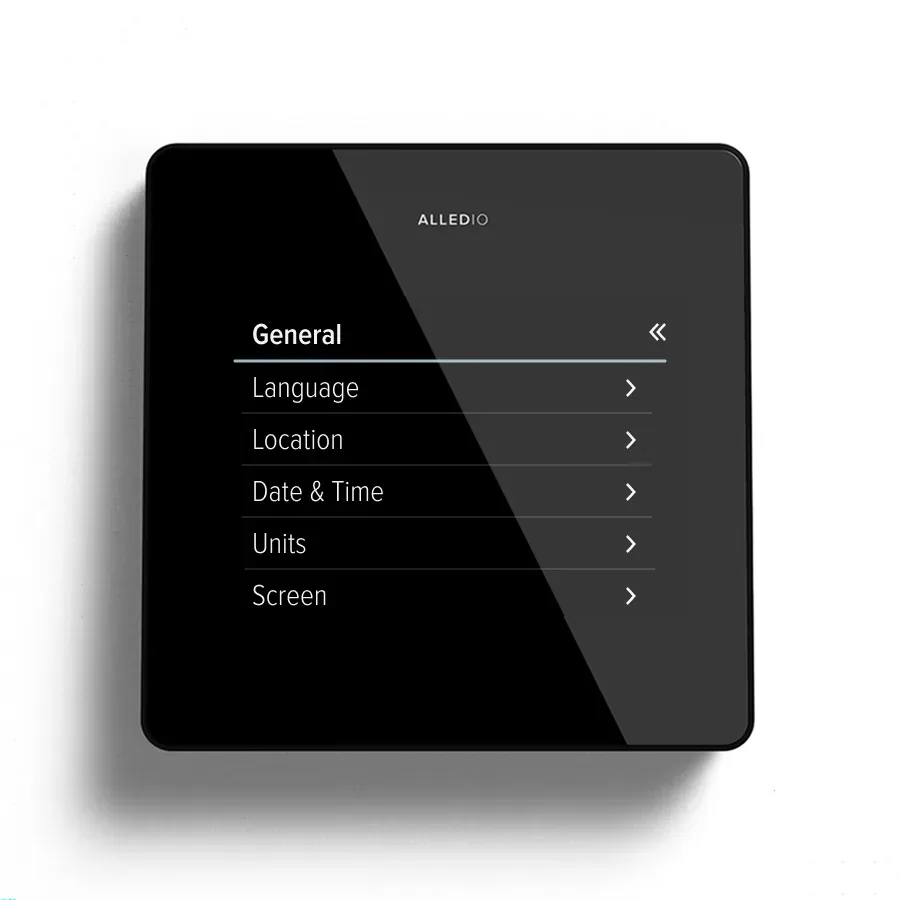
Configuration happens on the touch display itself - no app, no dongle and no laptop tool. For OEMs this cuts commissioning time and support calls, because every parameter an installer needs is reachable from the front.
Example terminal map
A typical 2-pipe fan coil with a modulating valve and an EC fan maps cleanly onto the Room Controller terminals. Reduced I/O versions keep the same numbering, so documentation survives a cost-down.
| Terminal | Example use on a 2-pipe FCU |
|---|---|
| UI2 (3) | Room or return-air temperature sensor, or window contact |
| UI3 (5) | Changeover pipe sensor |
| UIO1 (11) | Condensate alarm in, or occupancy contact |
| UO2 (13) | 0-10 V modulating valve |
| UO3 (15) | 0-10 V EC fan speed |
| UO4 (17) | Fan or electric heater enable |
| Modbus A/B (9/10) | RS-485 to BMS or OEM master |
| ±Vin (19/20) | 24 V DC or 24 VAC supply |
Need three-speed AC fan relays or on/off zone valves? Pair the Room Controller with the MR5 five-channel Modbus relay extender so its own universal I/O stays free for sensors. The Room Unit has no equivalent path - relays then belong on your host board.
For deeper application examples see OEM room controller with universal I/O, the 2-pipe 0-10 V guide and the 4-pipe 0-10 V guide. Each shows the I/O mapping per application.
Side-by-side comparison
| Topic | Room Unit | Room Controller |
|---|---|---|
| Role | Branded UI + sensors; host runs the plant | UI + sensors + I/O; runs its own control loops |
| Power | 12-42 V DC (24 V recommended) or 24 VAC ±25% | 18-42 V DC (24 V recommended) or 24 VAC ±25% |
| Field I/O | One optional 0-10 V analogue output | Max 2× UI, 3× UO, 1× UIO; 0-10 V or 4-20 mA |
| Relays | None | Via optional MR5 five-channel Modbus relay extender |
| Sensors | T/RH standard; optional VOC, CO2, pressure, presence | T/RH standard; optional CO2 and VOC |
| Bus | Modbus RTU on RS-485, slave by default | Modbus RTU on RS-485, slave by default; master on request |
| Mechanics | 98 × 98 × 23 mm | 98 × 98 × 23 mm |
| Typical buyer | OEM with a certified controller or BMS already in the unit | OEM that wants the wall device to drive valves, fans or dampers |
Read the table top-down. If your host already runs the plant, the Room Unit is the lean answer. If the wall must drive actuators, the Room Controller is the only honest choice - asking a Room Unit to do it means adding hardware somewhere else.
Need a 230 VAC relay device instead? That is the Thermostat family, covered in Room Unit vs Thermostat: OEM decision. Keep the power class separate from this choice.
When each one wins
Room Unit wins when your unit already ships with a controller you have certified, when your BMS or cloud owns the schedule, and when you want one wall SKU across many unit types. Examples are heat pumps with a main board, AHUs with a plant PLC, and connected programmes that only need a branded UI and IAQ data.
Room Controller wins when the wall must drive a 0-10 V valve, an EC fan or a damper, when you want to drop a separate controller from the bill of materials, or when standalone and networked projects should share one part number. Fan coils in hotels and offices are the classic case.
Mixed portfolios are common. Many OEMs ship the Room Unit on units with their own board and the Room Controller on simpler terminals. Because the glass, mechanics and Modbus habits match, one training pack covers both.
Protocols Alledio actually ships
Both families speak Modbus RTU on RS-485: half-duplex, 9600 to 115200 baud, parity none, even or odd, slave by default. Master firmware is available on request. If your existing product line has a Modbus map your integrators know, matching register numbers and scaling is usually a small firmware change.
Both add 2.4 GHz Wi-Fi with over-the-air updates and HTTPS. REST and MQTT access is limited to authorised partners, and Bluetooth is on board for partner-specified services.
BACnet is not in the standard firmware of either family; specific datapoints can be quoted as custom work. For native BACnet sensing, look at the Multi-Sensor. KNX is not offered. Stating this up front keeps delivery dates realistic.
Connected variants are declared against RED 2014/53/EU and RoHS. Ask for the document pack of the exact model you quote.
White label room controller HVAC: branding, MOQ and NRE
Both families are built for OEM customisation: logo, colour scheme, UI layout and screens, sensor mix, I/O configuration, packing and documentation. The Room Controller adds firmware behaviour and application logic to that list. See white label room controller HVAC for the branding workflow.
MOQ starts at 1,000 pcs per order and is negotiable for programmes that combine versions. Samples are purchased with demo or test firmware, so your lab can check glass, bus and outputs before committing. Room Controller lead time is 8-12 weeks once design and firmware spec are signed off.
A screen tweak is a tweak. A new firmware build is a project with planning, development and test cycles, quoted as NRE. If your sequence is unusual, Alledio hardware and software development can scope it before you commit - an honest estimate beats a surprise later.
FAQ
Can installers buy a Room Unit or Room Controller?
No. Alledio sells only to companies that build their own HVAC equipment and want an OEM wall device. Installers buy through that OEM.
Can we keep our existing sequences with the Room Controller?
Yes. Run them on your host and use the Room Controller as a Modbus slave, or move selected loops into its firmware as an NRE project. Safeties can stay on the controller you already certify.
Does the Room Unit run the plant?
No. The Room Unit is host-driven: it shows, senses and passes commands to your controller or BMS. Its optional 0-10 V output is a single signal, not a control platform.
Is the MOQ high?
MOQ starts at 1,000 pcs per order for both families and is negotiable for combined programmes. Samples with demo or test firmware are available for purchase.
Is KNX or BACnet a catalogue option?
No. KNX is not offered, and BACnet is not in standard firmware - specific datapoints can be quoted as custom work. Native BACnet sensing sits on the Multi-Sensor.
Do both share the same housing?
Yes. Both measure 98 × 98 × 23 mm with the same 3.5" glass, so mixed projects keep one industrial design on every wall.
What to do next
If the wall only needs to show and sense, open Room Unit. If the wall must drive valves, fans or dampers, open Room Controller. For custom sequences, see hardware and software development, then start an OEM enquiry or contact the team. Bring your I/O list, power class and target volume so the first quote is the right one.