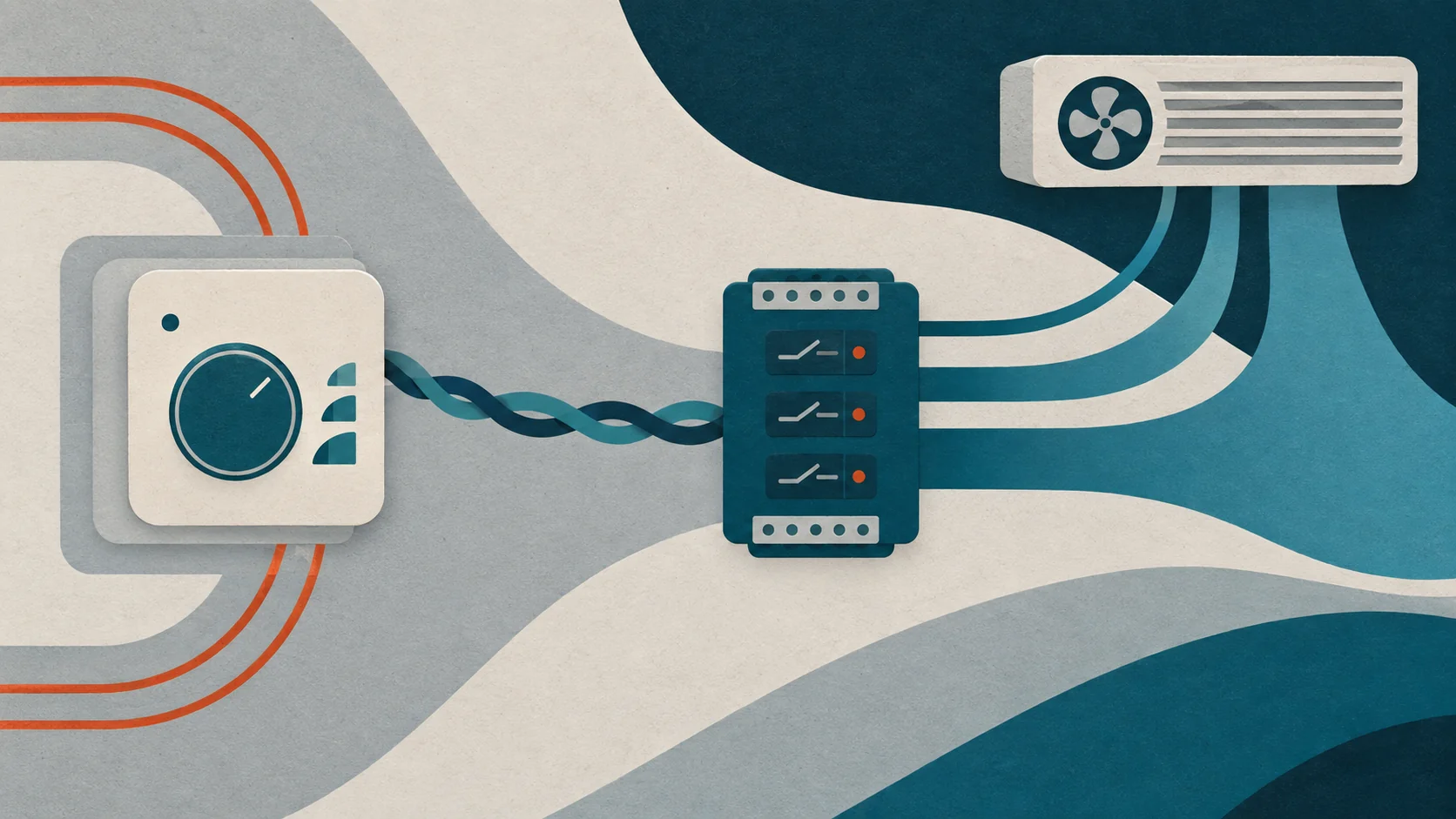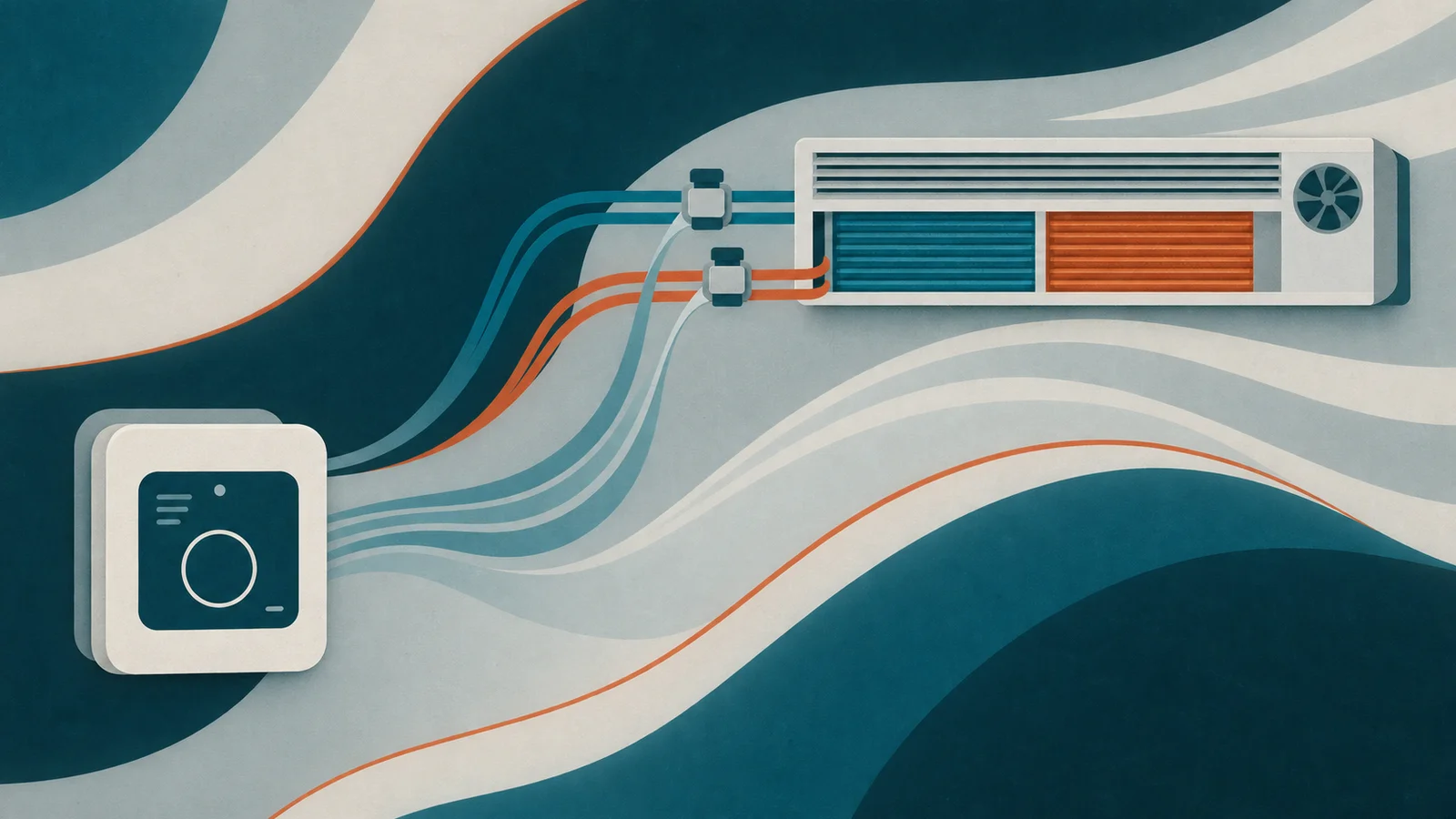
Four-pipe FCU lines that still ship a wall brick plus a separate I/O board lose months in every RFQ. A 4-pipe fan coil room controller 0-10V puts the glass, sensors, and analogue valve and fan outputs on one flush square — so heating and cooling coils see independent 0–10 V paths while plant safeties stay on the host you already certify.
OEM4-Pipe FCU0–10 VModbusRoom ControllerHVAC
Who specifies a 4-pipe Room Controller
This article is for HVAC OEM product and R&D teams building four-pipe fan-coil platforms — not for installers shopping a webshop. If you need simultaneous heating and cooling water circuits with analogue valves and an EC fan, this is the Room Controller path.
Alledio designs in Slovenia and manufactures in the EU for high-MOQ OEM programmes. The published commercial model starts at MOQ 1,000 (negotiable; 500 is possible when several Room Unit or Room Controller versions combined exceed 1,000). Samples ship with demo or test firmware under NDA via /oem.
Keep SKU families clean in the RFQ. A host-driven display without field I/O is the Room Unit. A 230 VAC relay brick for three-speed AC fans is the Thermostat. This page owns 4-pipe + 0–10 V on the Room Controller — not the later 2-pipe valve post, and not the live 3-speed FCU thermostat guides.
Typical end markets for four-pipe platforms include hotels, offices, and premium residential blocks where rooms must heat and cool without waiting on a seasonal changeover. Write that simultaneous duty into the RFQ so purchasing does not substitute a 2-pipe controller by accident.

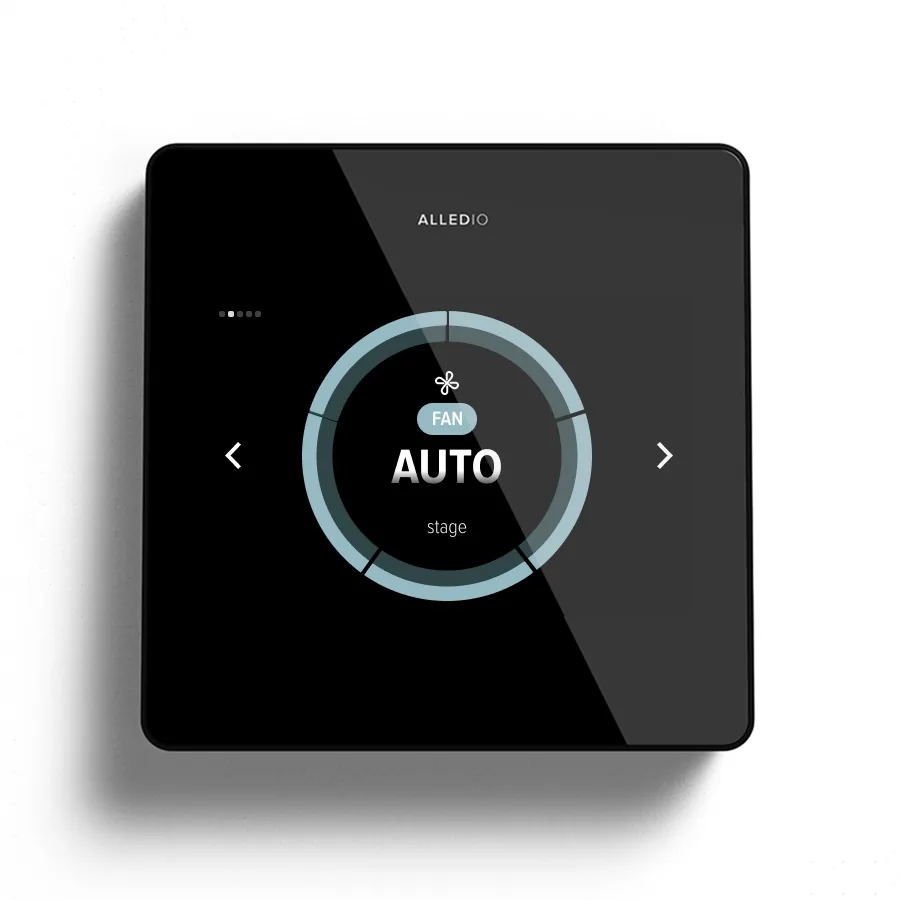
4-pipe fan coil room controller 0-10V — valves and EC fan on UO
On a four-pipe coil you typically need two independent analogue valve positions plus an analogue fan command. On the Alledio Room Controller those sit in the UO class (0–10 V), not on 230 VAC fan relays. Write the pin map and the TH / TH1 / TH2 / TH3 version into the ICD before NRE starts.
Published maximum I/O mix is 2× UI, 3× UO, and 1× UIO. Concrete counts depend on the version you order. Treat empty terminals as a commercial choice, not as free jumpers for the field team to invent later.
Optional sensors — VOC, CO2, pressure, presence — stay on the order form as options. They do not replace the need to name which UO drives heat valve, cool valve, and fan. A clean RFQ lists the signal map beside the glass artwork.
Why 0–10 V belongs on a controller, not a relay thermostat
Three-speed 230 VAC relays belong on the Thermostat family and on posts such as the 3-speed FCU OEM thermostat buyer guide. When the coil motor and valves are analogue, keep the RFQ on the OEM room controller with universal I/O pillar and on this 4-pipe page.
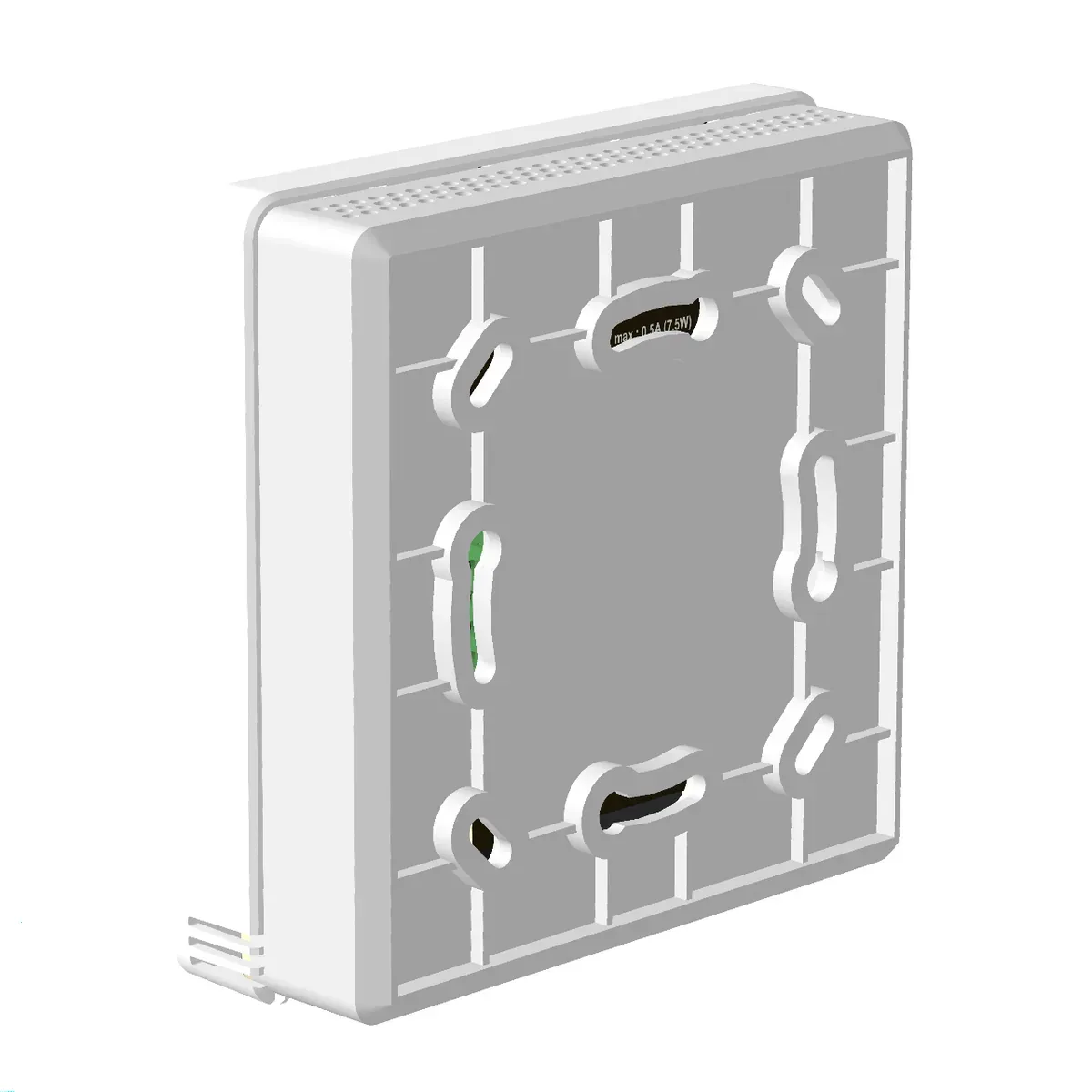
Put termination, common reference, and cable class next to the pin list. Commissioning days disappear when the glass looks finished but the I/O class was never written down. Link the mechanical drawing to the same pack that lists Modbus registers.
Sequence ownership on four-pipe
The Room Controller can host application logic you specify — local loops, schedules, OEM widgets — while safeties stay on the board or BMS you already defend. Write who owns simultaneous heat/cool limits, dew-point guards, and which setpoints are only requests to the host.
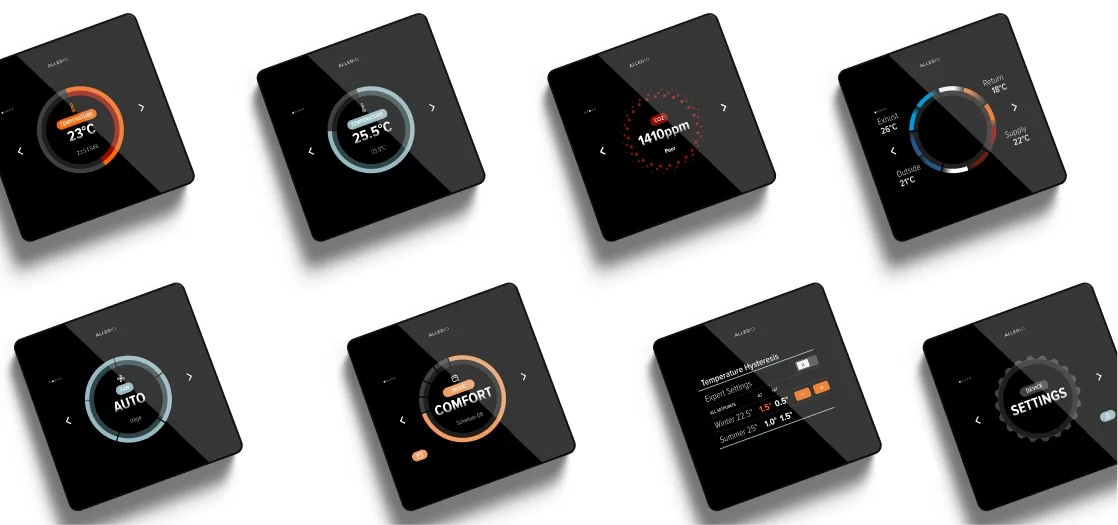
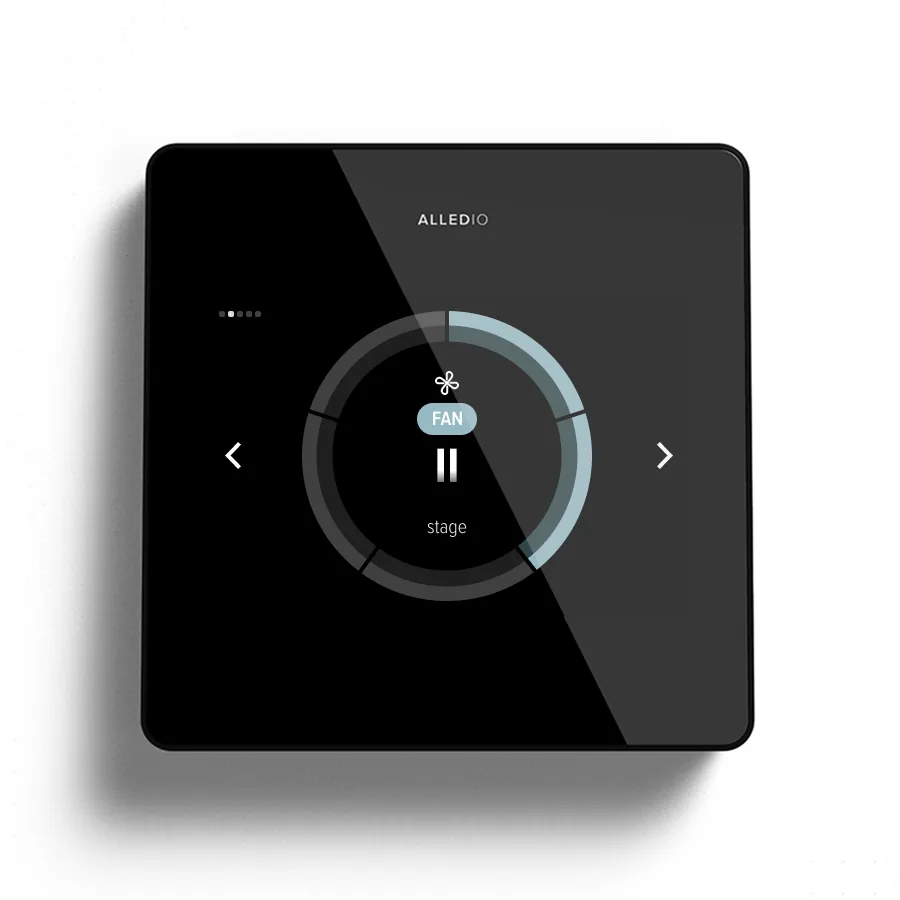
Samples arrive with demo or test firmware so your lab can exercise valves, fan analogue, Modbus, and the 3.5-inch panel before production NRE. Production firmware is quoted as NRE against your register map, branding pack, and I/O table.

Fence vs 2-pipe and vs thermostat pillars
This page owns four-pipe simultaneous circuits and 0–10 V valve/fan mapping on the Room Controller. The sibling 2-pipe fan coil room controller with 0-10V valve covers changeover and a single valve path — do not merge those pipe topologies into one RFQ sentence.
Do not cannibalise live thermostat pillars: OEM Modbus relay thermostat, 3-speed FCU, or white-label FCU thermostat pages. Those are mains-relay SKUs. Power on the Room Controller is 18–42 V DC (24 V recommended) or 24 VAC ±25% — never 230 VAC.
Modbus RTU on RS-485 is the default copper citizen. Native BACnet and KNX are not published catalogue SKUs on this line. Wi-Fi OTA and partner MQTT/REST are the connected options; BLE 5 is ready for commissioning maps you own.
Glass, mechanics, and OEM branding
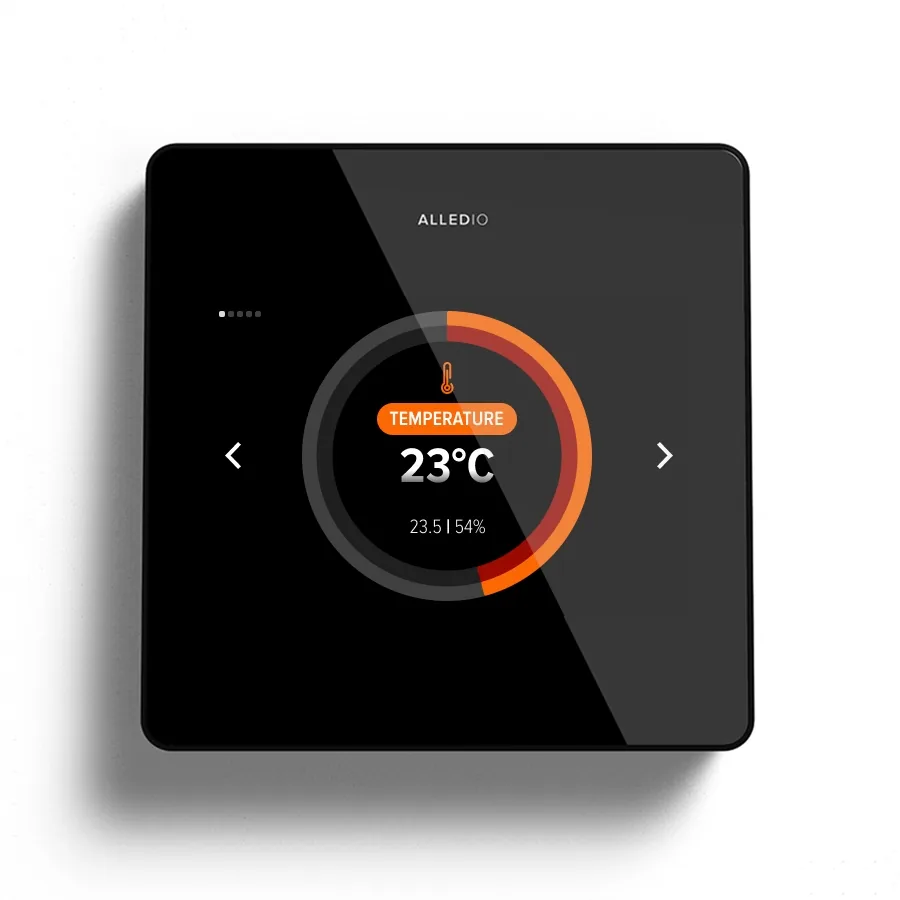
A 3.5-inch 480×320 capacitive panel fits a 98 × 98 × 23 mm IP20 housing (150 g) — thicker than the 14 mm thermostat family so terminals and I/O fit. Capacitive glass keeps the controller in the same visual family as the Room Unit.
OEM customisation covers logo, UI colours, widgets, hardware options, and firmware. You pay for the delta against a modular platform, not for reinventing a certified radio and a mould. Same panel language appeared at MCE Milano 2026 and in how it feels.
When the RFQ also asks for flush depth, treat it as the same square family described in the 3.5 inch OEM HVAC touch panel thread — same glass language, different I/O and firmware load. That is how a controller line stays coherent next to a Room Unit SKU.
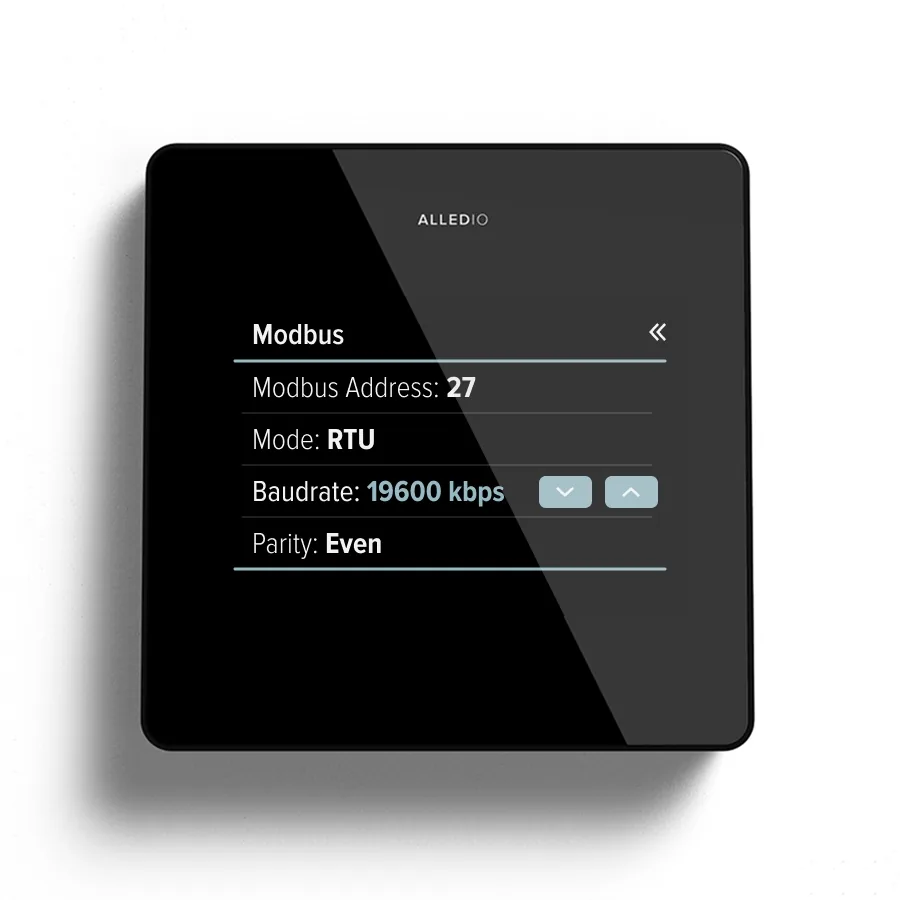


Product proof
Published proof for a 4-pipe analogue FCU programme is the combination of universal I/O, 0–10 V UO, and OEM apps on one EU-made wall controller — not a Nest-style retail brick and not a 230 VAC relay thermostat.
| Topic | Published spec |
|---|---|
| Display | 3.5-inch LCD, 480 × 320, capacitive touch, auto brightness |
| Sensors (standard) | Temperature and humidity |
| Sensors (optional) | VOC, CO2 (400–5000 ppm), pressure, presence |
| Universal I/O (max) | 2× UI, 3× UO, 1× UIO (TH / TH1 / TH2 / TH3) |
| I/O classes | Analogue 0–10 V / 4–20 mA; digital open-collector / 0–30 V input |
| Fan path on RC | Analogue 0–10 V / EC on UO — not 3-speed 230 VAC relays |
| Bus | RS-485 Modbus RTU (slave default; master on request), 9600–115200 |
| Radio / API | Wi-Fi 2.4 GHz with OTA; MQTT/REST for authorised partners; BLE 5 ready |
| Power | 18–42 V DC (24 V recommended) or 24 VAC ±25%; never 230 VAC on RC |
| Mechanics | 98 × 98 × 23 mm, 150 g, IP20 |
| Origin | Designed Slovenia, manufactured EU |
| Commercial | OEM-only; MOQ 1,000 (negotiable; 500 if several RU/RC versions combined exceed 1,000); samples with demo/test firmware |
Not a catalogue claim here: native BACnet on standard Room Controller firmware; a KNX SKU; installer webshop pricing; 230 VAC relays. Confirm any cell on the current datasheet before you lock an RFQ. For deeper custom work use hardware and software development.
Compliance for connected variants starts from RED 2014/53/EU, RoHS, and the 10-year security-update window in the OEM agreement. Ask for the document pack before the first production lot. More on about.
FAQ
Is this a thermostat?
No. This is a Room Controller with universal I/O and 0–10 V outputs for four-pipe valves and EC fan. The Thermostat family is the 230 VAC relay SKU.
How many 0–10 V outputs can I use for heat, cool, and fan?
UO channels are versioned. The published maximum mix is 2× UI, 3× UO, and 1× UIO on TH / TH1 / TH2 / TH3. Lock the version and pin map in the ICD.
Can we get samples?
Yes. Samples of the Room Controller are available with demo or test firmware so your lab can validate valves, fan analogue, Modbus, and the glass before production NRE. Request them under NDA via the OEM conversation.
What is the MOQ?
MOQ starts at 1,000 units and is negotiable. 500 is possible when several Room Unit or Room Controller versions combined exceed 1,000. Lead time is quoted after design and firmware are signed off.
Is BACnet or KNX a catalogue checkbox?
No. Modbus RTU on RS-485 is the default. Native BACnet and KNX are not published SKUs on this Room Controller line — budget a separate quote if the RFQ demands them.
Can an installer buy one from a webshop?
No. Alledio sells to OEMs. Installers and SIs get devices through the OEM channel.
What to do next
Start on the Alledio OEM Room Controller page, then open an OEM conversation for logo, UI, I/O version, firmware NRE, and samples. Bring the four-pipe pin map, Modbus register draft, power class, and MOQ. That is the shortest path from an RFQ sentence to a 4-pipe 0–10 V wall controller under your brand.