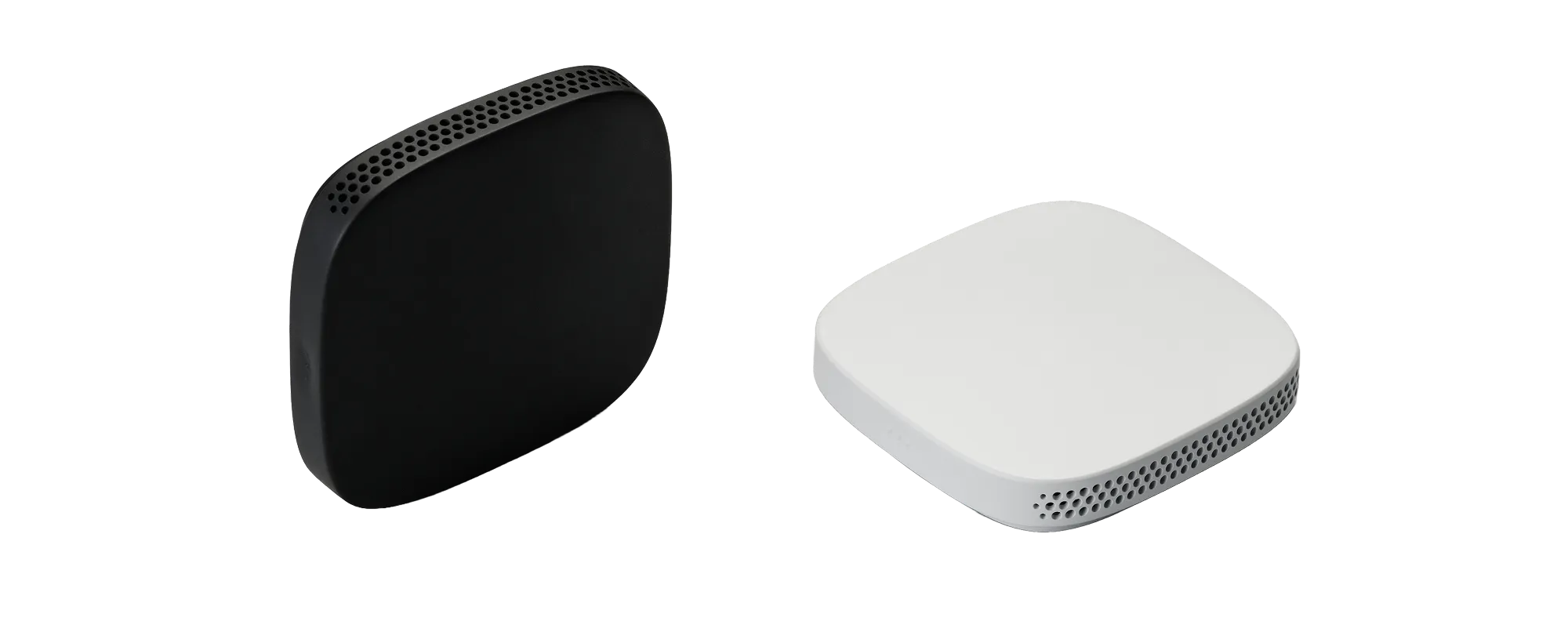
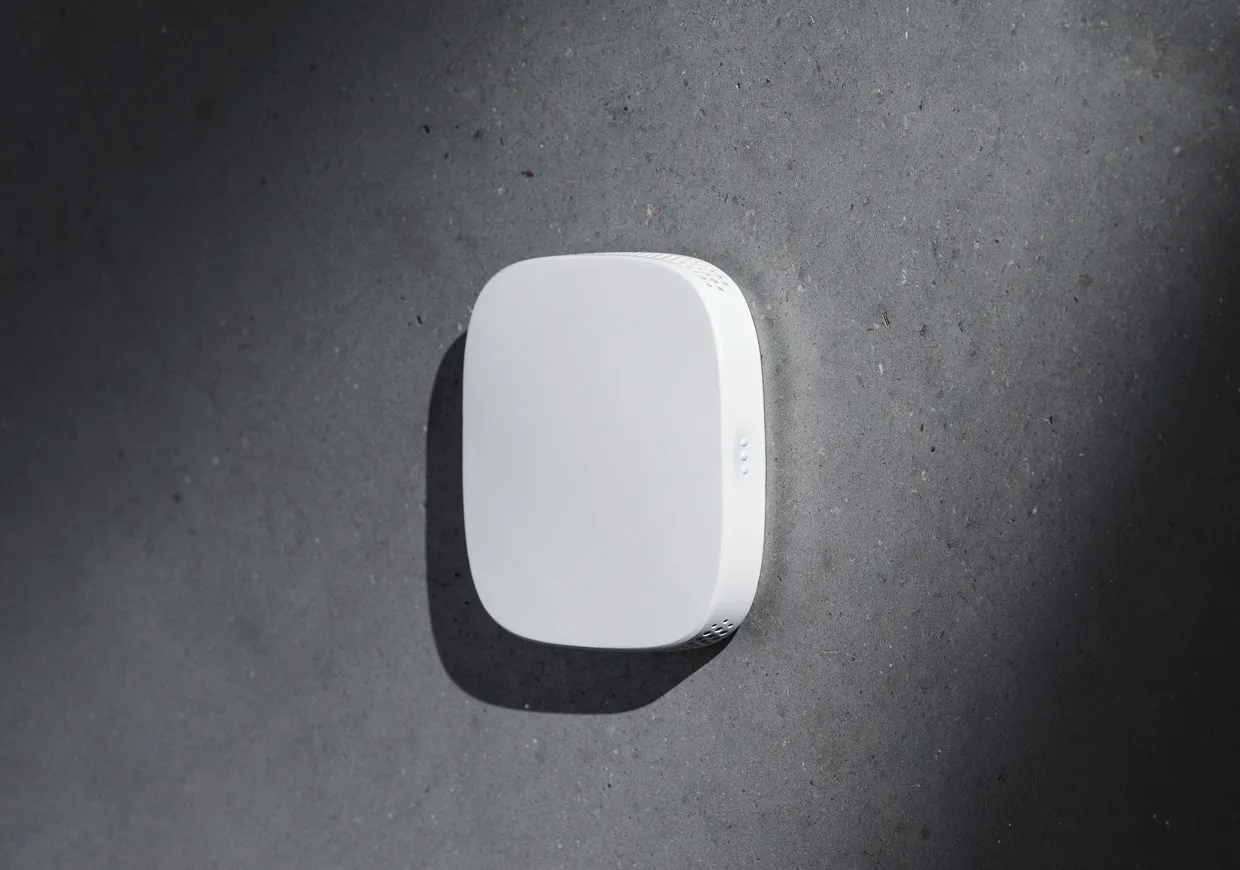
Commercial buildings now ask the wall to prove air quality, not just temperature. An OEM BACnet wall multi-sensor IAQ node gives HVAC and BMS brands one 87 × 87 mm device that reports temperature, humidity, VOC, CO2, pressure, and presence as native BACnet objects over MS/TP or BACnet/IP. Dew point, enthalpy, and density of moist air arrive already computed. The Alledio Multi-Sensor (ANB line) ships under your brand, is commissioned from a phone over NFC, and is built in Slovenia for OEM programmes, not webshop buyers.
OEMBACnetIAQCO2BMSWhite Label
Who this wall sensor is for
This guide is for product managers, controls engineers, and BMS teams at HVAC and building-automation OEMs: AHU, VAV, fan-coil, heat-pump, and controls brands that need a branded room node on their own BACnet network. It is not written for installers buying a single sensor.
Alledio sells to OEMs only. The commercial model starts at MOQ 1,000 pcs, negotiable per programme, with sample devices for lab evaluation before production. There is no webshop; installers and integrators receive devices through the OEM brand that specifies them.
The typical brief is short: one wall node per zone that the BMS can discover, read, and trend without a gateway. Write that native BACnet requirement into the RFQ early, because it decides the ANB versus ANM product code before anything else.
OEM BACnet wall multi-sensor IAQ: what one node measures
The ANB line combines physical sensing and computed psychrometrics in a single wall housing. Which values are populated depends on the variant you order, so the product code belongs in the specification, not in a later change request.
Measured values
Temperature (output range -40 °C to +125 °C, typical ±0.5 °C at 0–65 °C) and humidity (0–100 % RH, ±1.8 % RH at 30–70 %) are standard; ±0.2 °C and ±1 % RH are available on request. CO2 reads 0–5000 ppm at ±(50 ppm + 5 % of reading) between 400 and 2000 ppm, with automatic self-calibration every 7 days.
VOC is reported as a VOC Index from 1 to 500, where 100 is the learned 24-hour baseline of that room. Pressure covers 300–1200 hPa. Presence reports detected or not detected from about 1.0 m to 10.5 m. A THPM2.5 variant is listed on the product page, but PM2.5 is not yet in the current datasheet's variant or object table; ask for availability, object mapping, and accuracy data in the RFQ.
Computed values
Dew point, enthalpy, and density of moist air are calculated on the device from temperature, humidity, and pressure. That hands an AHU or VAV controller psychrometric inputs without extra BMS maths. The background is covered in our article on why enthalpy matters in AHUs.

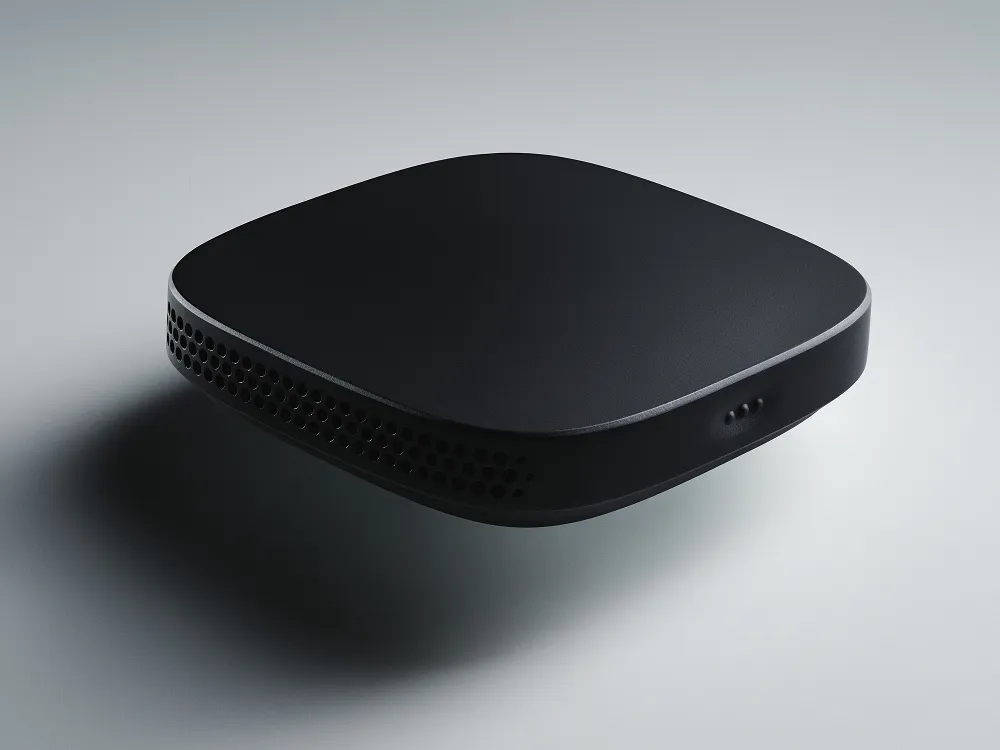

The ANB family scales from a TH temperature and humidity node up to THPVCP, which adds pressure, VOC, CO2, and presence. When a sensing element is not fitted on a variant, its BACnet object reports Out_Of_Service = True instead of sending fake zeros to the trend log.
Commercial IAQ use cases: offices, meeting rooms, and VAV zones
Offices and meeting rooms
Meeting rooms swing from empty to crowded in minutes. CO2 and presence together let the BMS run demand-controlled ventilation per room instead of a fixed schedule, while the VOC Index catches overnight cleaning and new-furniture off-gassing that CO2 alone misses.
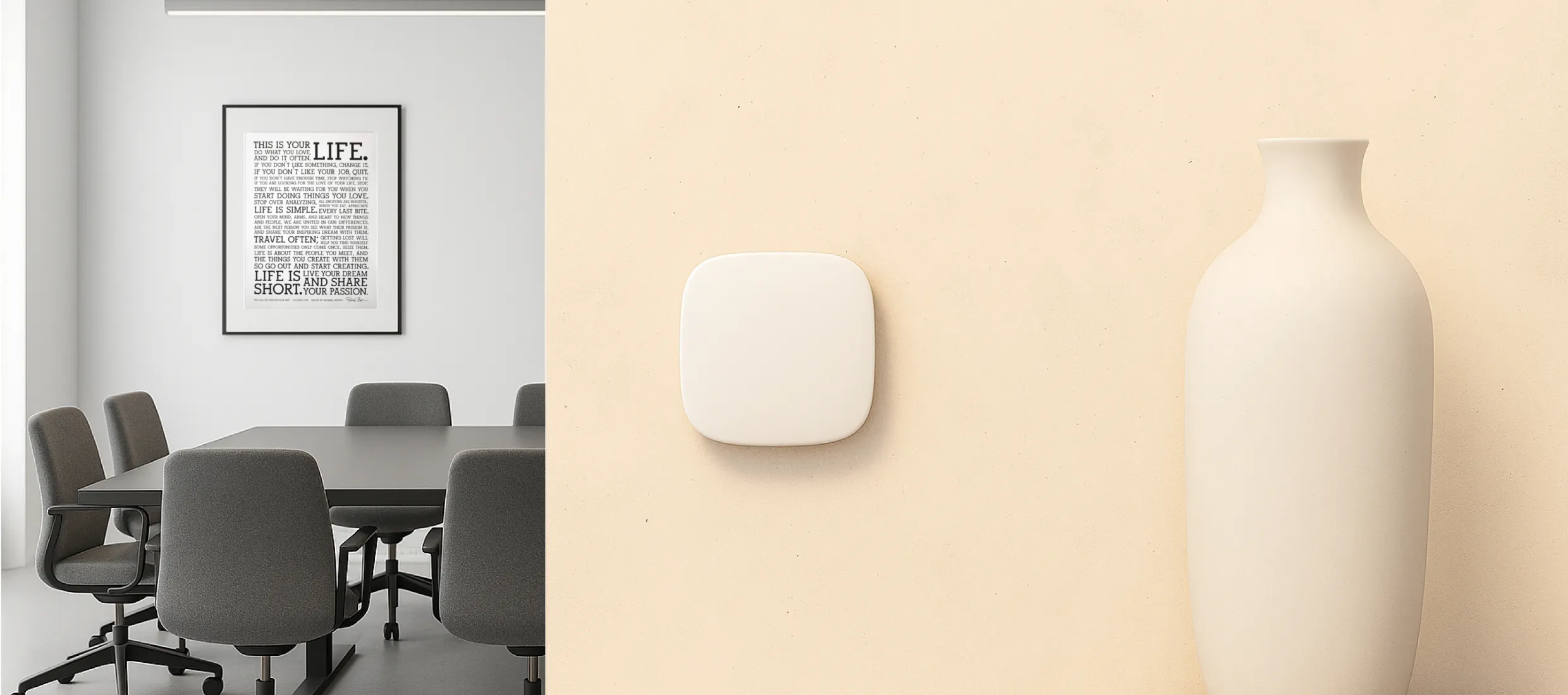
Mount the node at about 1.5 m on an inside wall, away from direct supply-air blow, fan coils, and split units. Flush mounting fits a standard EU flush box (Ø 68 mm, 60 mm screw spacing, minimum 40 mm deep). The housing is rated IP30 for -10 °C to +50 °C and up to 85 % RH non-condensing.
VAV and AHU zones
On VAV and AHU projects the same node feeds zone temperature and CO2 to the box controller and gives the air handler enthalpy and dew point for economiser and dehumidification logic. One device replaces separate temperature, humidity, and CO2 transmitters on the same wall.
The Multi-Sensor has no display. When occupants need a setpoint screen, add a separate wall UI such as the Room Unit or an OEM Room Controller with universal I/O, and keep the sensor where airflow is clean.
Retail, server rooms, and other commercial spaces
Retail floors, server rooms, and open offices use the same objects with different thresholds. Server rooms lean on temperature and humidity trends; retail and open-plan zones lean on CO2 and VOC. One SKU family keeps the BMS template identical across the whole portfolio.
BACnet MS/TP and BACnet/IP on one wall node
Every ANB variant supports BACnet MS/TP on RS-485, BACnet/IP, and Modbus RS-485. The communication mode is chosen at commissioning, so one hardware SKU covers both BACnet trunks and keeps spares simple.
MS/TP settings
Device ID is configurable from 0 to 4,194,303, MAC addresses run 0–127, and Max Master defaults to 127. Set Max Master to the highest MAC actually used on the trunk; it is the simplest MS/TP performance fix on large floors.
Baud rate is selectable from 9600 to 115200 with optional 120 Ω termination. Up to 64 devices per segment is the recommended limit without repeaters. Use twisted pair with drain wire suited to RS-485; isolated RS-485 up to 1 kV is available on special request.
BACnet/IP over Wi-Fi
For BACnet/IP the node joins the building Wi-Fi network. Commissioning sets Device ID, SSID, password, and UDP port, with 47808 as the default port. Agree with IT which SSID the sensors join before the first floor is installed.

Objects and COV
The object table is fixed and readable: AI 0–5 carry temperature, humidity, VOC, VOC Index, CO2, and pressure; AV 0–2 carry dew point, enthalpy, and density of moist air; BI 0 carries presence. Default COV increments include 0.5 °C, 5 % RH, 50 ppm CO2, and 10 mbar.
Programmes that stay on Modbus only can specify the ANM twin, which carries the same sensing on Modbus RS-485 without BACnet. For mixed estates, the ANB code keeps both protocols in one SKU.
NFC commissioning and calibration in the field
There are no DIP switches. Tap an Android or iOS phone on the case, and NFC opens a local web app in the browser over a hidden Wi-Fi link that works within about 2 m and switches off after 15 minutes.
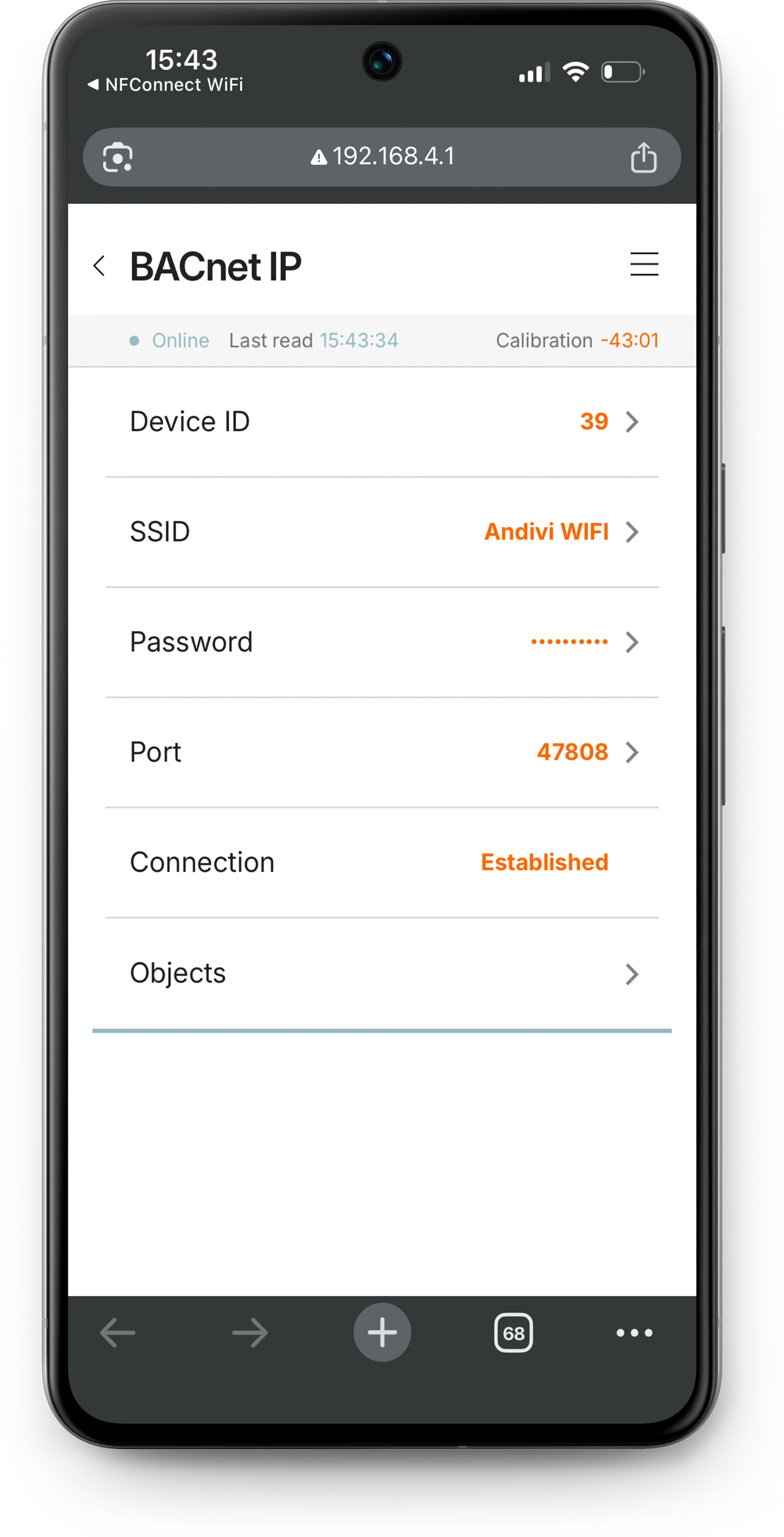
From that app the commissioning engineer sets BACnet MS/TP or BACnet/IP parameters, Modbus settings, and per-sensor offsets against a reference instrument. Firmware update and rollback run from the same menu.
After first power-up, allow 30–45 minutes of initial auto-calibration before setting offsets. For CO2, the room should see roughly 400–500 ppm at least once a week so the 7-day self-calibration stays accurate; put that in the O&M notes for 24/7 spaces.
Product proof and OEM branding
Published proof for a commercial IAQ programme is the combination of native BACnet, computed psychrometrics, and NFC setup in one EU-made wall node. The design was recognised with a Red Dot award in 2026.
| Topic | Published spec |
|---|---|
| Product | Alledio OEM Multi-Sensor, ANB-[…] BACnet and Modbus line (ANM-[…] is the Modbus-only twin) |
| Variants | TH, THPV, THPC, THPVC, THPVCP; THPM2.5 listed on the product page |
| Measured | Temperature, humidity, VOC Index, CO2, pressure, presence (variant-dependent) |
| Computed | Dew point, enthalpy, density of moist air |
| Protocols | BACnet MS/TP, BACnet/IP over Wi-Fi, Modbus RS-485 |
| BACnet objects | AI 0–5, AV 0–2, BI 0; Out_Of_Service flags missing elements |
| Commissioning | NFC tap plus local web app; offsets; firmware update and rollback |
| Power | 24 VAC (max 1.5 VA) or 12–42 V DC (max 1.1 W) |
| Mechanics | 87 × 87 × 19 mm, 55 g, flame-resistant ABS, IP30 |
| Ambient | -10 °C to +50 °C, max 85 % RH non-condensing |
| Origin and warranty | Designed and made in Slovenia, EU; 1-year warranty |
| Commercial | OEM-only; MOQ 1,000 pcs (negotiable); paid samples with demo or test firmware |
Not claimed here: a BTL listing, a KNX SKU, or installer webshop pricing. Confirm every cell against the current datasheet and manual before you lock the RFQ.

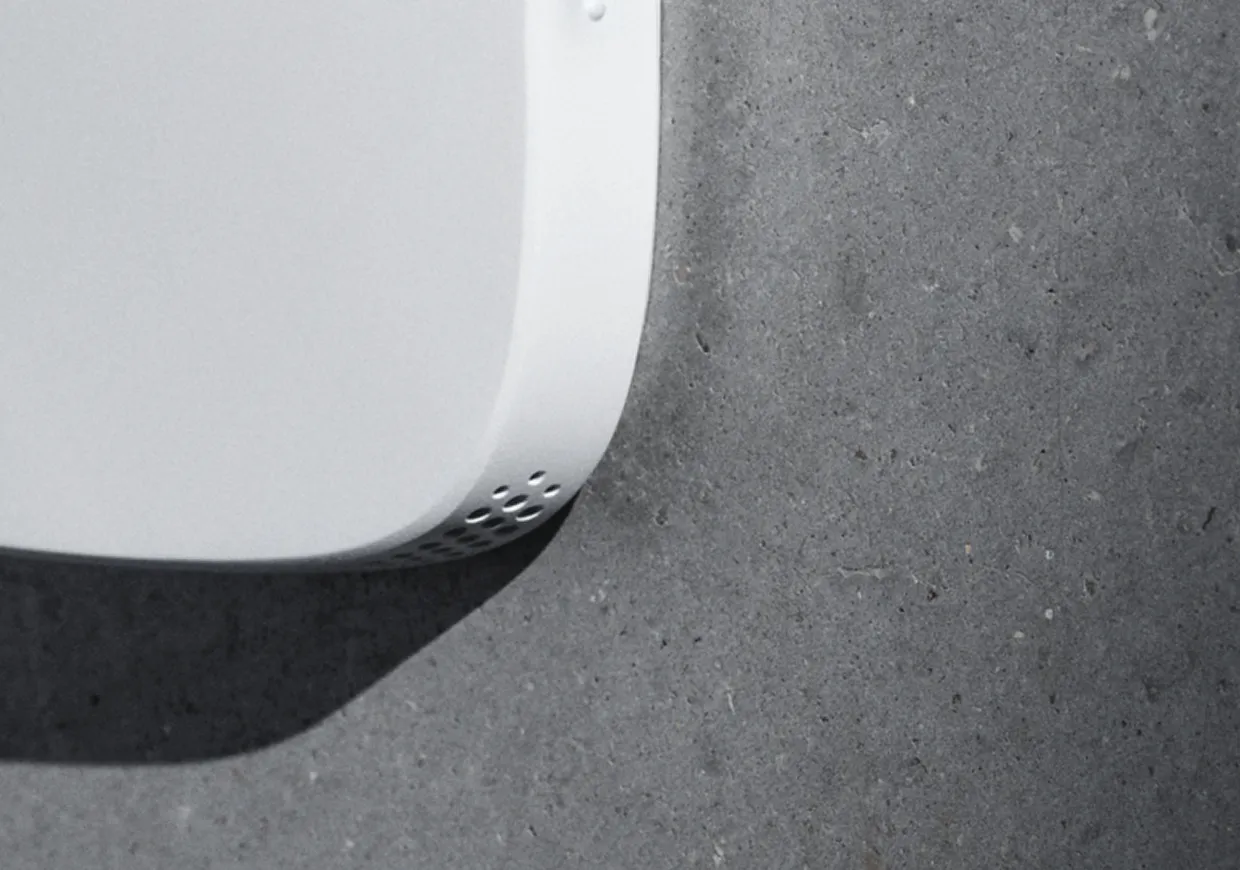
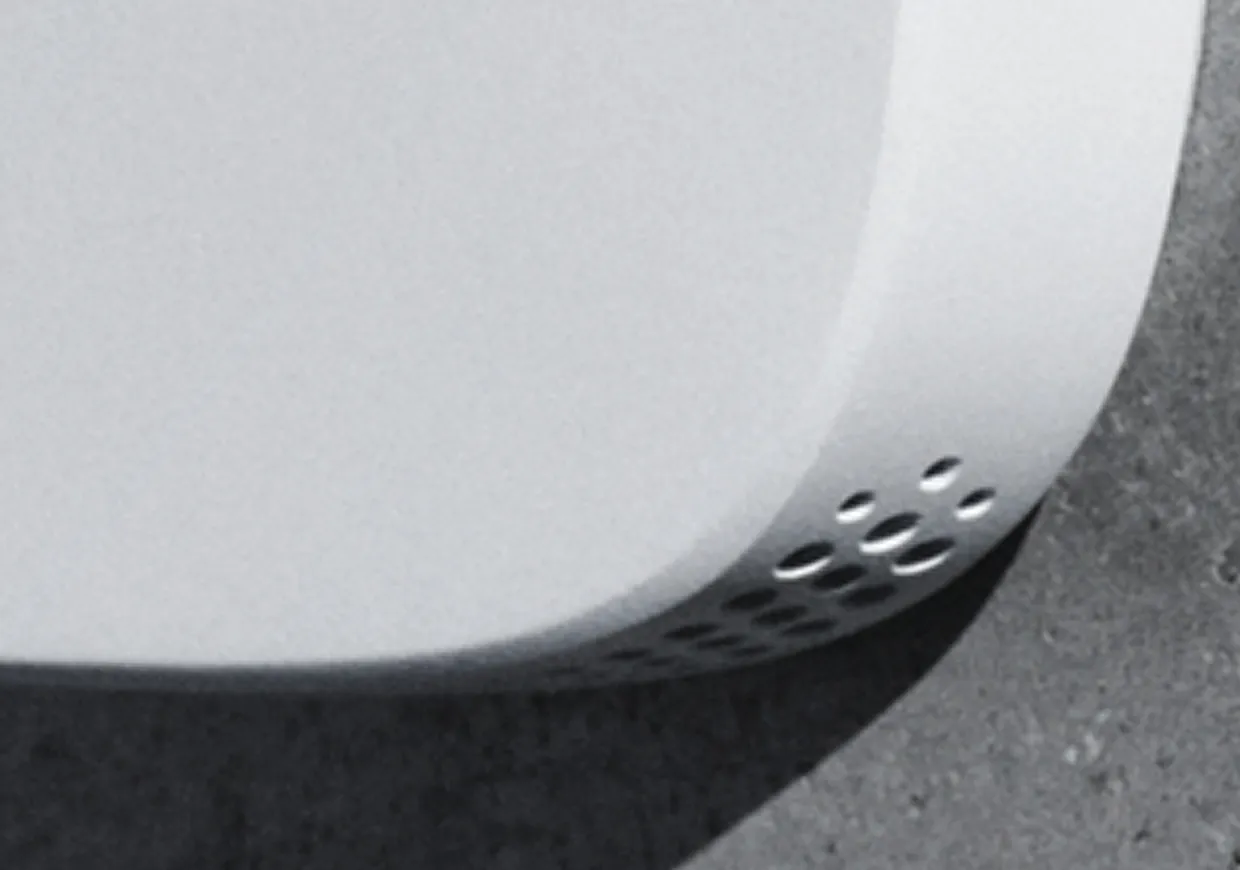
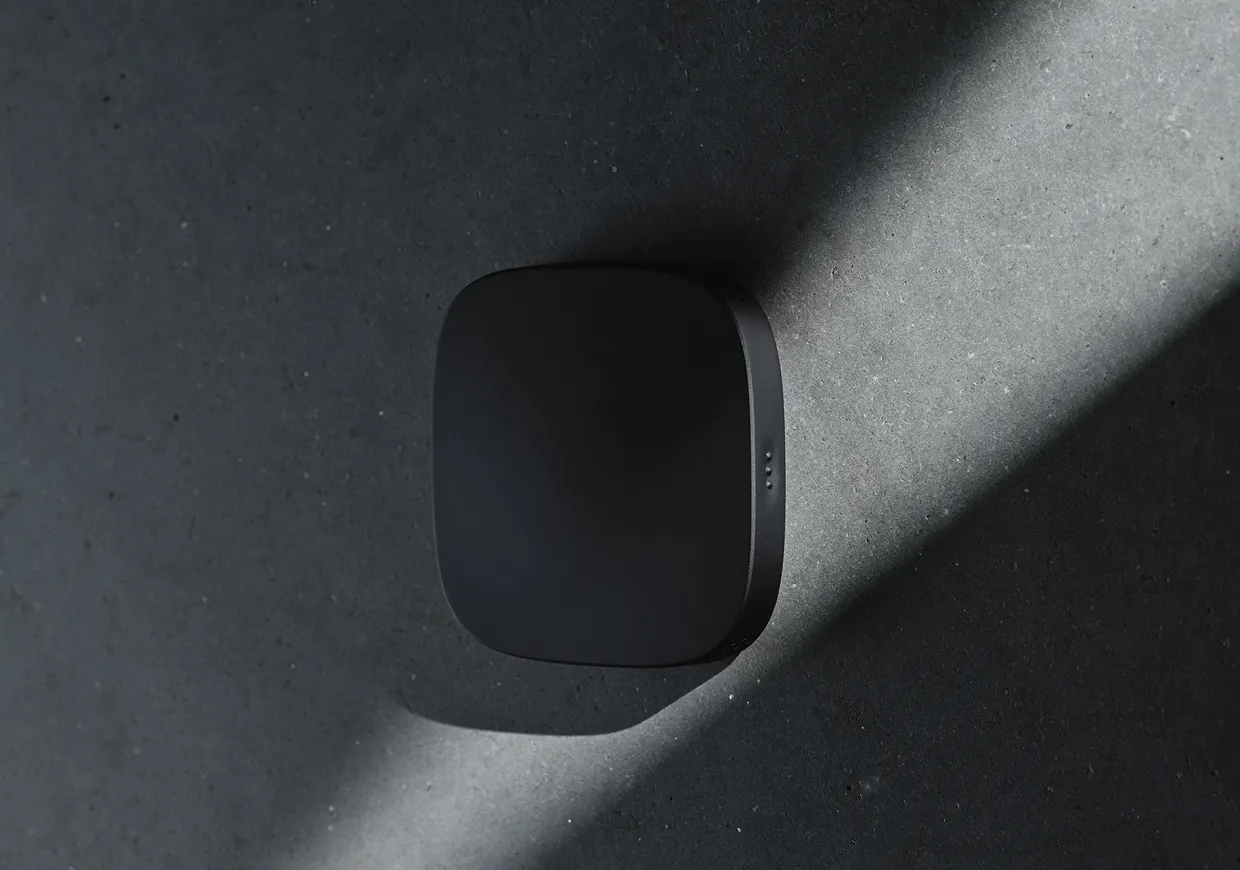
OEM customisation covers logo, finish (bright white or blurred black), packaging, protocol defaults, and firmware. For larger programmes Alledio can integrate further sensors such as lux, sound level, or formaldehyde, validated on your chosen protocol through OEM engineering.
The sensor was shown to HVAC and refrigeration buyers at Refrigera 2025 in Bologna. Compliance starts from RED 2014/53/EU, including Delegated Regulation (EU) 2022/30, and RoHS; ask for the EU Declaration of Conformity with the sample. More on about Alledio.
FAQ
Is BACnet native or through a gateway?
Native. ANB variants run BACnet MS/TP and BACnet/IP on the device itself, with the object table listed above. No protocol gateway is needed between the sensor and the BMS.
Can an installer buy one sensor from a webshop?
No. Alledio sells to OEMs. Installers and integrators get devices through the OEM brand that specifies them.
Does the sensor run the plant from the wall?
No. It is a sensing node. Control sequences, safeties, and setpoints stay in the BMS or your OEM controller, which reads the BACnet objects.
Is there a KNX SKU or a BTL listing?
No KNX catalogue SKU is published, and a BTL listing is not claimed. Ask for the current protocol documentation in the RFQ if your tender requires it.
What is the MOQ and can we get samples?
MOQ starts at 1,000 pcs and is negotiable. Samples are purchased rather than free and ship with demo or test firmware, so your lab can check BACnet discovery, objects, and COV before production firmware and branding are locked.
Can we specify PM2.5?
A THPM2.5 variant is listed on the product page but isn't in the current datasheet's variant or object table yet. Ask for availability, object mapping and accuracy data in the RFQ.
What to do next
Start on the Alledio OEM Multi-Sensor page, then open an OEM conversation for variant code, finish, branding, protocol defaults, and samples. Bring the zone list, BACnet trunk plan, Device ID range, and target volume. That is the shortest path from an RFQ line to a branded BACnet IAQ node on your customers' walls.