European FCU lines that still feed the wall from mains do not want a low-voltage Room Unit RFQ by mistake. A 230VAC OEM HVAC thermostat is the relay SKU: 230 VAC supply, three-speed and heat/cool contacts, Modbus on RS-485, and a white-label glass designed in Slovenia.
230 VACOEMHVACFCURelayEurope
Alledio’s OEM Thermostat publishes that mains path. Occupants see your brand flush in an EU wall box. Your coil still sees contact closures. The commercial model remains high-MOQ OEM — not a retail Nest box.

Who specifies 230 VAC on the wall in Europe
This article is for EU and UK HVAC OEMs whose FCU or local HVAC platforms still expect mains at the wall thermostat. It is written for product and controls teams, not for installer retail.
End markets on the OEM page include offices, schools, hotels and museums. Installers cannot buy Alledio direct. The usual MOQ is 1,000 pcs, and it is negotiable. Samples use demo or test firmware under NDA. Country of design is Slovenia; manufacturing is EU.
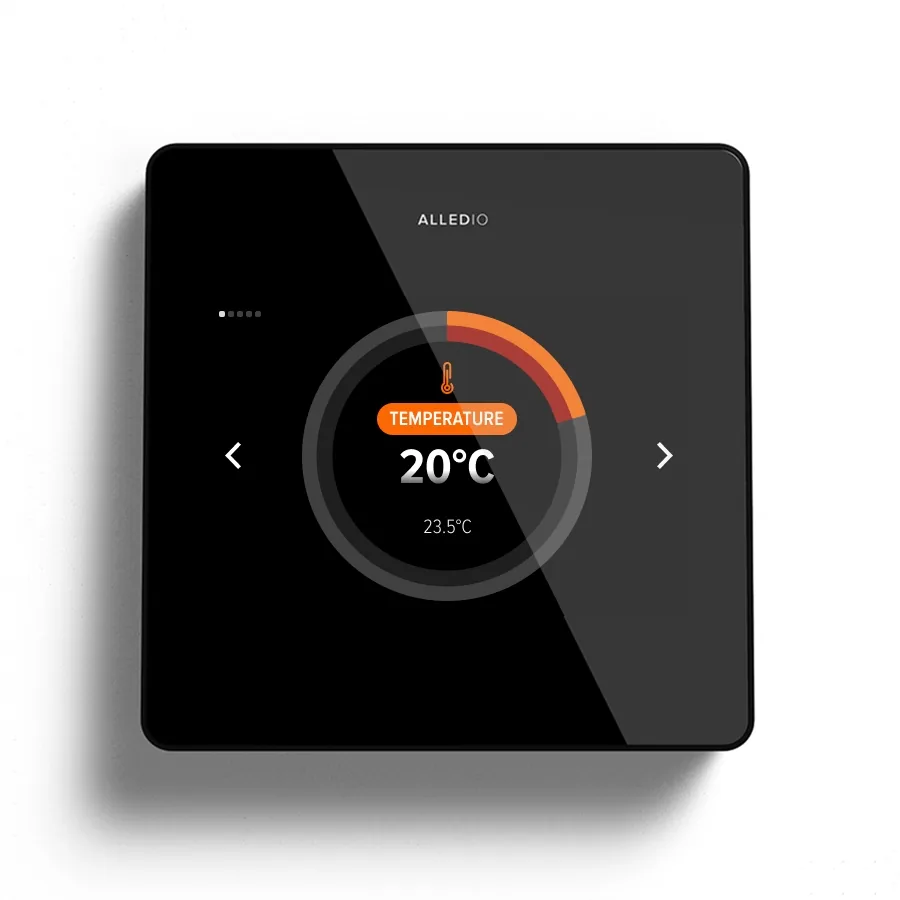
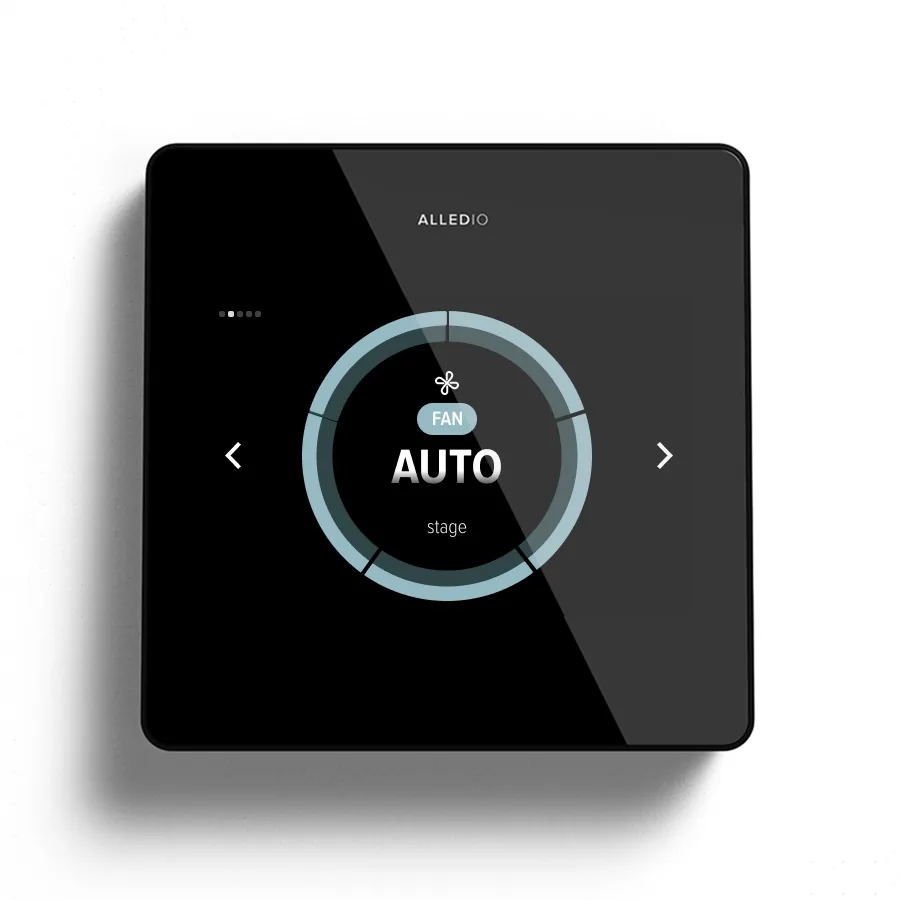
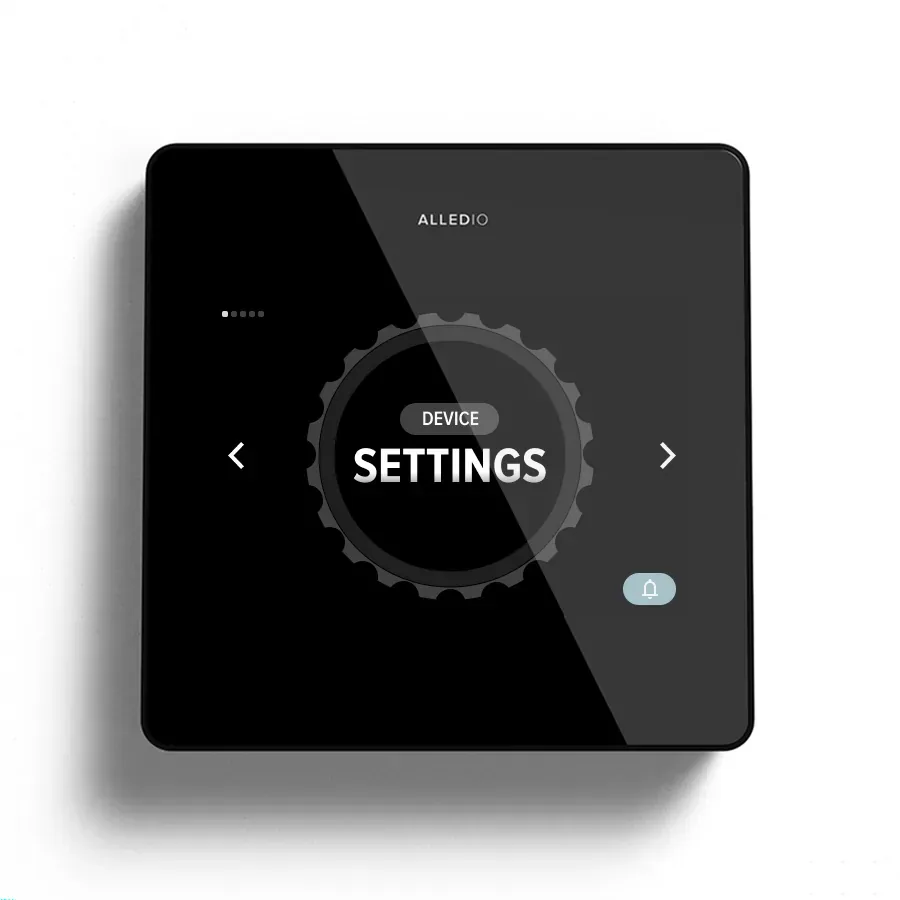
European wiring practice varies by country, but the design language of this SKU is clear: mains at the wall, relays for fan and heat/cool, Modbus on copper, glass that carries your brand. Write the national box and earthing assumptions you already pull so commissioning does not invent a shim stack.
Typical applications remain fan coil units, air handling units, DX equipment, and other local HVAC systems that need relay outputs. When the coil motor class is three-speed AC relays first, pair this mains article with the 3-speed FCU OEM thermostat buyer guide. If the line is moving to a low-voltage host-driven UI, start a Room Unit RFQ. Do not force this thermostat to pretend it is a 24 V citizen.
230VAC OEM HVAC thermostat — why European FCU walls still use mains
Many European fan-coil installs already pull mains to the wall location. Changing that feed to 12–42 V DC or 24 VAC is a platform project, not a sticker change. If your coil expects relay outputs at the wall, keep the 230 VAC thermostat RFQ separate from the Room Unit RFQ. For the broader Modbus-relay thermostat pillar — register map, white-label glass, and high-MOQ OEM framing — keep reading the OEM Modbus relay thermostat guide.
The published fan path is speed 1 / 2 / 3 / Auto / off plus heat/cool relays. Do not assume EC. Do not copy Room Unit power into this pack. Write the isolation and protective-earth questions your safety team already asks, and confirm answers on the current datasheet — do not invent millimetre or kV figures here.
Low-voltage alternatives exist in the Alledio family: the Room Unit is host-driven at 12–42 V DC or 24 VAC. That is a different SKU class. Mixing the two power stories in one RFQ is how commissioning invents a field adapter.
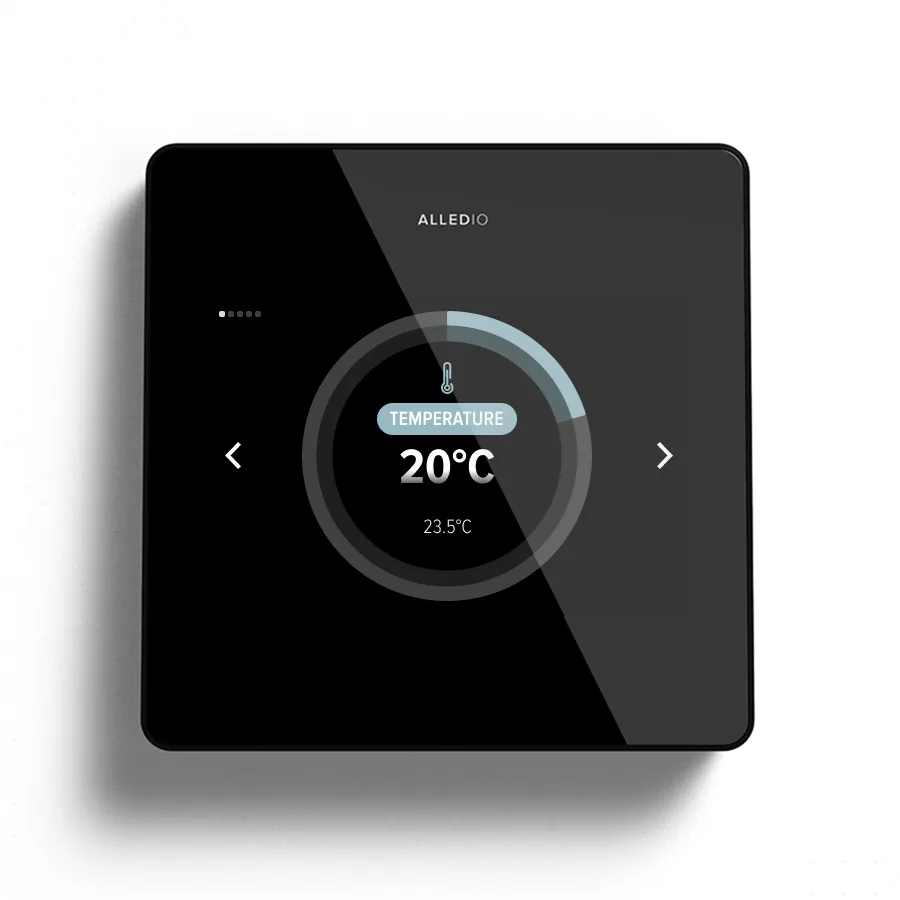
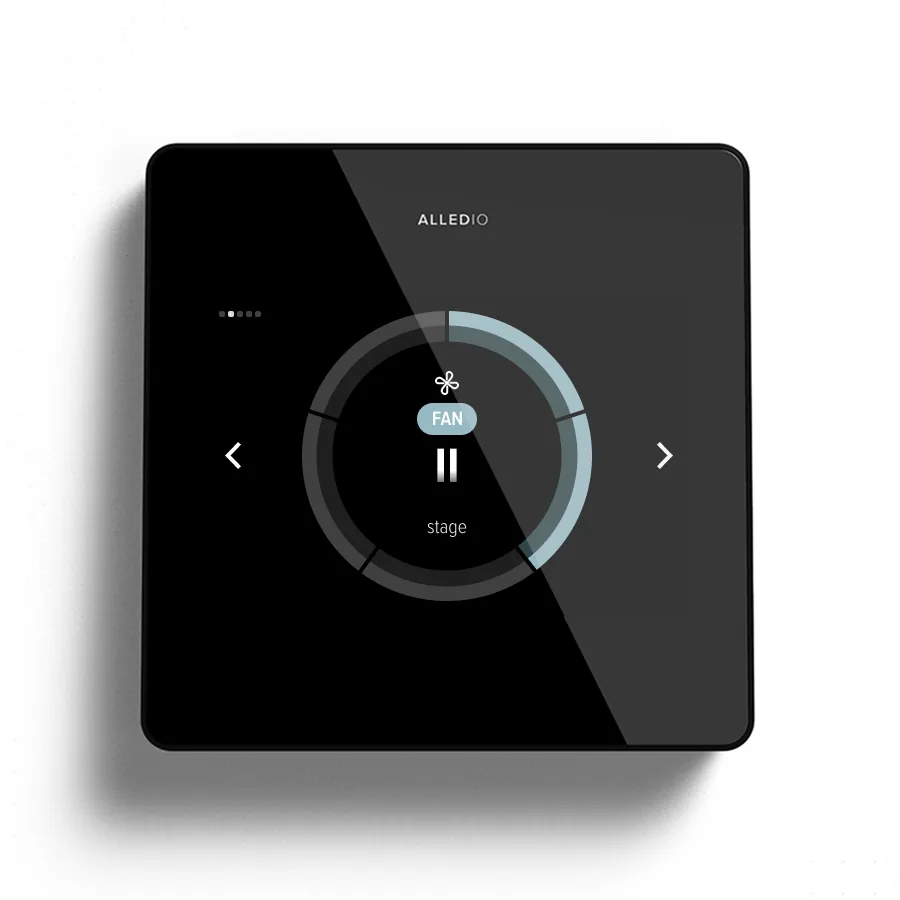

A hotel SKU and a commercial office SKU can share the same board and still look like two products. The hotel pack usually wants a quiet night schedule. The office pack usually wants the same three-speed relays plus a Modbus map the BMS already expects. That is one electronics revision and two faces — the commercial point of a white-label programme.
Optional VOC, optional CO2, and optional external NTC are orderable when the FCU line needs them. None of those options change the published 230 VAC supply or the relay fan path. Quote sensors as options. Quote power and relays as the platform.
OEM thermostat 230VAC isolation questions for the RFQ
Put isolation language in the RFQ without inventing listings. Ask which protective earth practice your line already uses, how the glass side is separated from the relay side in your application note, and which EN 60730 clauses your approvals team will defend. Confirm every number on the datasheet you hold.
Compliance listed on the product page includes CE, EN 60730-1, EN 60730-2-9, and EN 300 328 V2.2.2. Do not invent UL listings for markets you have not quoted. Security updates are listed as a 5-year window.
OEM customisation still covers logo, UI, colourway, optional VOC/CO2, packing and docs. A hotel SKU and a commercial office SKU can share one board. Bring artwork early so NRE stays on the face, not on a new mould.
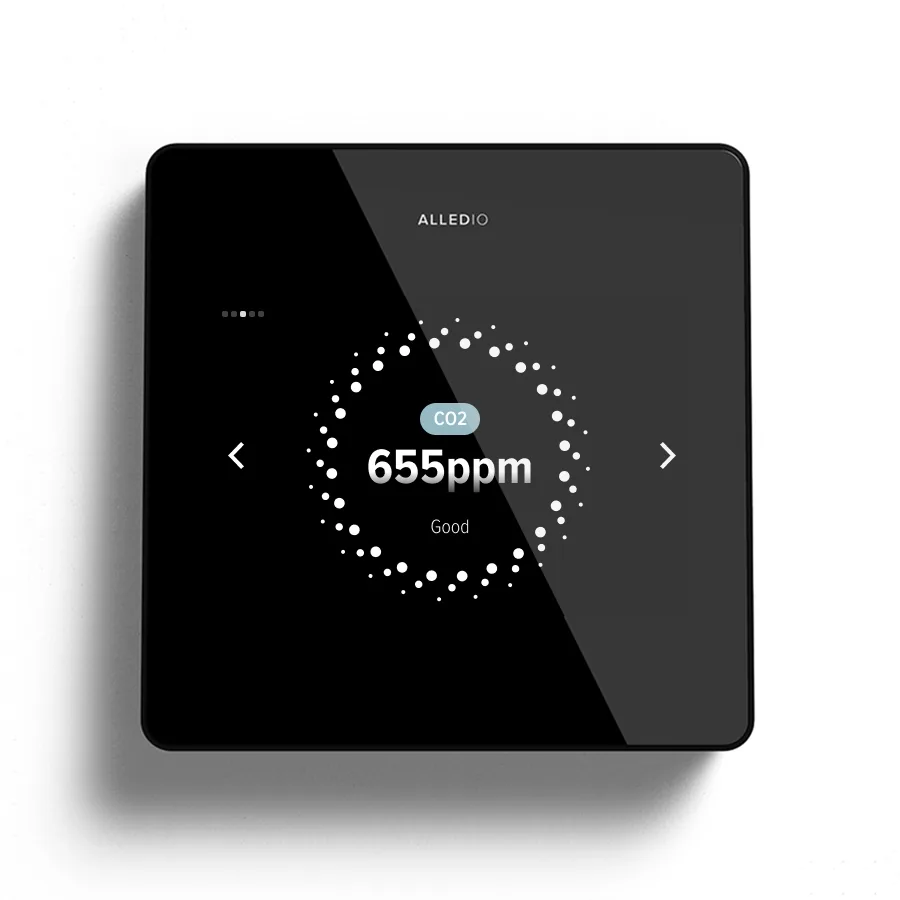
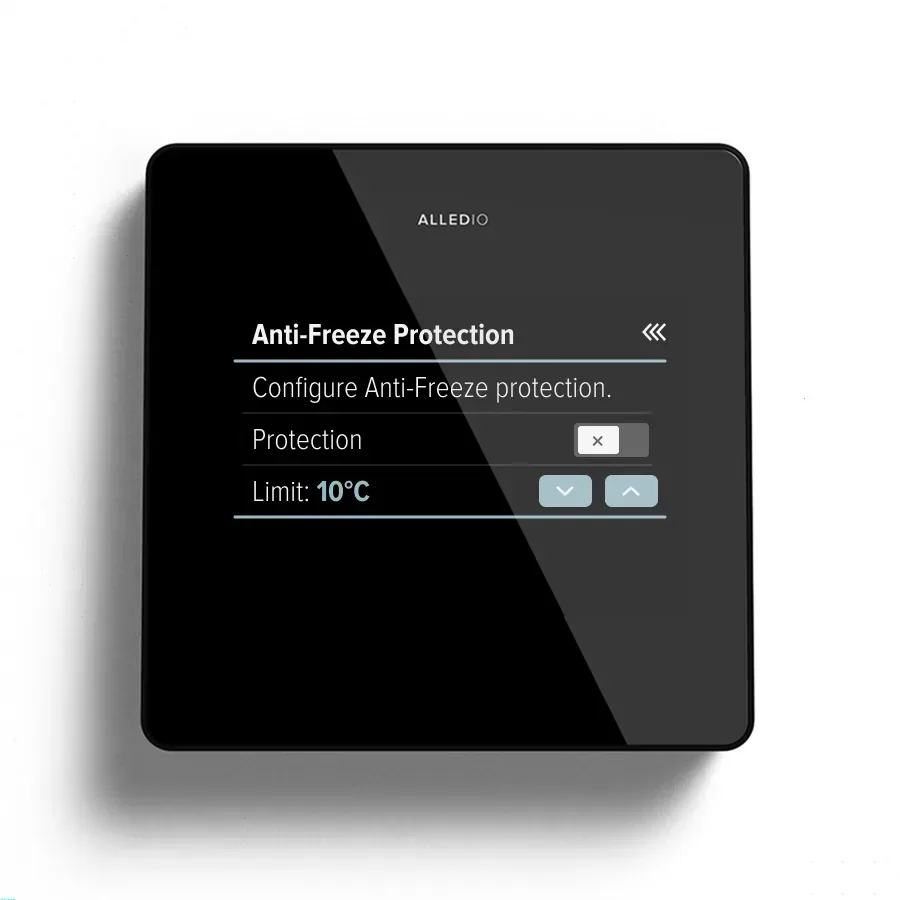
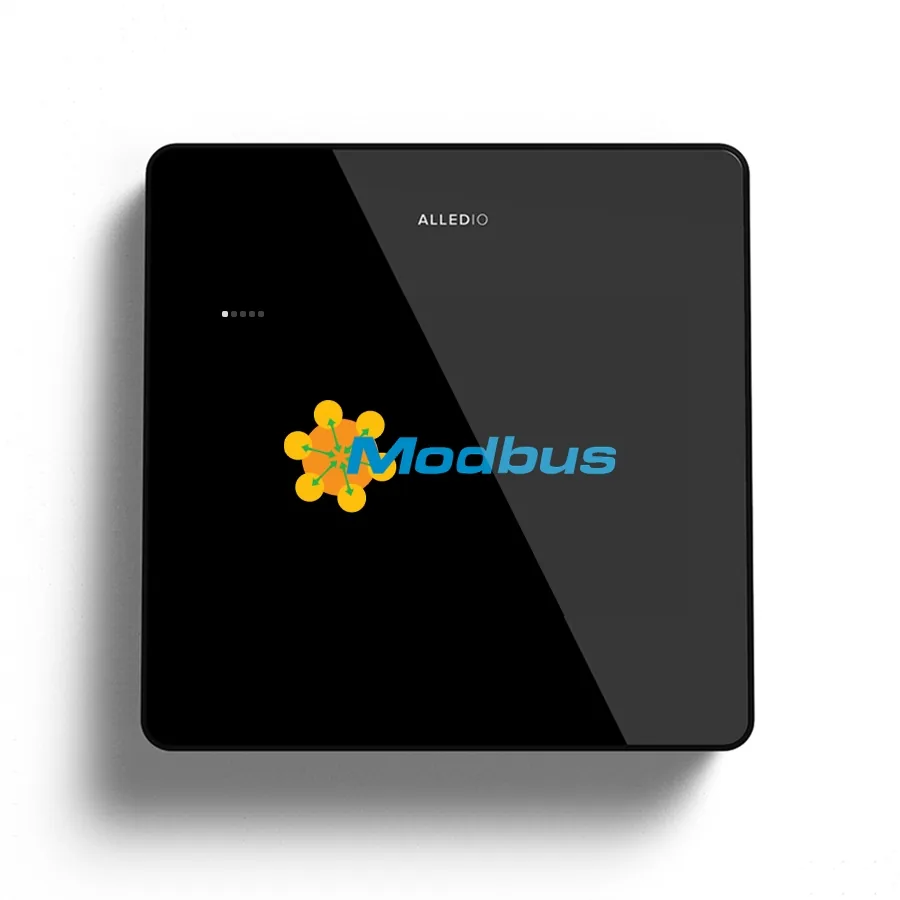
Mechanics you can defend today: 98 × 98 × 14 mm, 150 g, IP20, ABS plus scratch-resistant glass, flush-mounted in a standard EU box (Ø 60 mm). Display: 3.5" LCD at 480 × 320 with capacitive touch and a brightness sensor. Those numbers are what an industrial designer can put next to a corridor elevation without inventing a second thickness.
How the room feels still matters in Europe’s hotel and office stock. See Beyond design: it’s how it feels for that thread. Brightness, night behaviour, and absence modes belong in the firmware NRE list next to logo and colourway. They are not retail app features. They are OEM programme lines.
I/O, Modbus, and European commissioning
Modbus RTU on RS-485 is the default supervisory pair. Wi-Fi 2.4 GHz STA is listed for connected SKUs; MQTT is named for cloud paths. Write address, baud, parity, and register expectations so field teams do not invent a map on site.
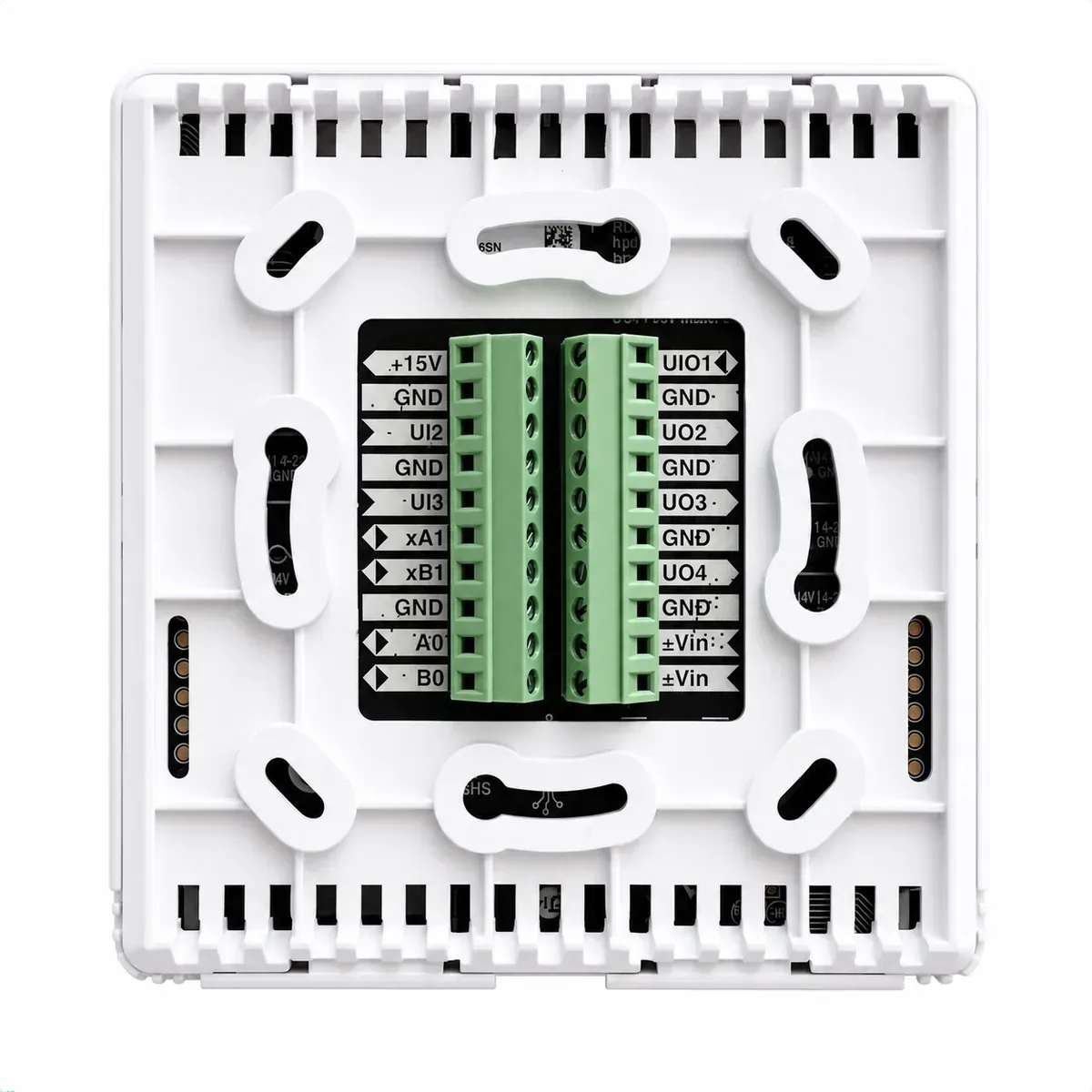
I/O models (AO/DO combinations plus heat/cool relays) are published options. Name the model. Do not add a KNX catalogue SKU or a Nest-style retail part number. Read About for who Alledio sells to — OEMs — before you promise an installer channel you do not have.
Name the sample count you need under NDA and whether demo firmware or test firmware is required for the first bench. Write who owns the artwork and who owns the register map. Those two owners should sign the same RFQ so NRE does not split into two silent projects. That is how OEM programmes stay honest on MOQ.
If several brand versions share electronics and only differ in logo and colour, say so in the RFQ. Combined quantity over 1,000 pcs can open a path down to 500 on a version for Room Unit or Room Controller family logic discussed on /oem — ask the same question for thermostat versions so purchasing is not surprised. Keep the conversation on the OEM page.
Do not promise an installer webshop, a Nest-style retail box, or a catalogue KNX SKU in the same sentence as this thermostat. Those promises break channel strategy and force a redesign. Alledio sells to OEMs. Your channel sells to installers. Keep that split as a commercial rule.
Keep the RFQ language precise on units: 230 VAC, 98 × 98 × 14 mm, 3.5" glass, RS-485 half-duplex, Modbus address 1–247. Short paragraphs beat brochure tone. Specifiers should be able to paste the product-proof table into an internal pack without rewriting every cell. That is the point of a defensible OEM page.
When you compare this SKU to a catalogue private-label thermostat, ask what changes on the glass and what stays on the coil. If only the logo changes and the relay map stays honest, you are in the right RFQ. If you need analogue fan or a different power class, stop and open the matching Alledio family page before you invent a hybrid SKU.
Product proof
| Topic | Published spec |
|---|---|
| Product | Alledio OEM Thermostat (Modbus / relay) |
| Power | 230 VAC |
| Fan relays | Speed 1 / 2 / 3 / Auto / off |
| H/C relays | Heating / cooling |
| Display | 3.5" LCD, 480 × 320, capacitive touch, auto brightness |
| Sensors (standard) | Digital temperature and humidity |
| Sensors (optional) | VOC, CO2, external NTC |
| Bus | RS-485 Modbus RTU, half-duplex |
| Wi-Fi | 2.4 GHz (802.11 b/g/n) STA |
| Mechanics | 98 × 98 × 14 mm, 150 g, IP20, EU flush box Ø 60 mm |
| Origin | Designed Slovenia, manufactured EU |
| Standards | CE, EN 60730-1, EN 60730-2-9, EN 300 328 V2.2.2 |
| Security support | 5-year update window |
Put this table next to your European FCU wiring note. Leave unpublished consumption cells empty. Confirm isolation language with your safety team before you lock the line RFQ.
FAQ
Can installers buy this from a webshop?
No. Alledio sells to OEMs. Installers get units through your channel.
Is the published supply 24 VAC?
No. The published thermostat supply is 230 VAC. Discuss low-voltage alternatives as a different SKU class.
Should we assume EC fans?
No. Do not assume EC. The published fan path is relays.
Can we get samples?
Yes. Samples with demo firmware or test firmware are available under NDA via /oem.
What is the MOQ?
The usual MOQ is 1,000 pcs, and it is negotiable.
Do you list UL for this SKU here?
Do not invent UL listings in the RFQ. Use the compliance lines published on the product page and confirm any extra marks as quoted OEM work.
What to do next
Start on the Alledio OEM Thermostat page, read About, then open /oem for logo, UI, firmware and samples. Bring 230 VAC wiring practice, three-speed relay needs, Modbus map, MOQ, and glass artwork. That is how a 230VAC OEM HVAC thermostat becomes a European line SKU instead of a mismatched low-voltage RFQ.